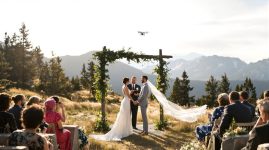
How to Add Drone Footage Without Disrupting Your Ceremony
Adding drone footage to your wedding without disruption? It’s doable if you plan correctly. First, secure your venue’s permission and verify it’s legally allowed. Schedule flights outside key ceremony moments—no one wants drone buzzing during their vows. Create a clear shot list, and coordinate with your photo team to avoid repetitive footage. Prepare for weather surprises with a fallback plan. Confirm your pilot is FAA-certified. Want drama-free, breathtaking aerial shots? Stick to these guidelines.
Who this guide is for (you want drone footage but you don’t want chaos)
If you’re dreaming of adding drone footage to your wedding ceremony, but the idea of chaos offers you nightmares, this guide is your sanity saver. You can add drone footage without disruption by focusing on drone ceremony coordination and ensuring unobtrusive drone coverage. Think of it as a dance; the drone moves smoothly without stepping on anyone’s toes.
To achieve this harmonious balance, consider:
Choose venues with space, time drone flights to vows, and hire expert pilots for seamless coverage.
- Venue selection: Choose locations with ample outdoor space for safe drone operation.
- Timing precision: Coordinate with your photographer to avoid noise during vows.
- Operator expertise: Hire seasoned drone pilots familiar with wedding settings. It is important to ensure that your drone operator has obtained the FAA Part 107 certification, which is required for legal drone operation in the U.S.
Quick takeaway: schedule flights outside ceremony moments for the best results
Let’s be real: drones buzzing overhead during your vows can be as welcome as a mosquito at a picnic. To nail your drone timing ceremony, coordinate flights outside key moments. Prioritize aerial footage coordination to avoid disrupting the heart of your ceremony.
- Schedule flights for the reception or sendoff: Keep those dramatic shots for when guests are dancing or leaving, not when you’re exchanging rings.
- Use golden hour or post-ceremony windows: Capture breathtaking shots during quieter moments like morning preps or evening celebrations.
- Notify everyone involved: Communicate with planners, DJs, and even neighbors to guarantee seamless drone ceremony coordination. Remember, the FAA regulations mandate buffer zones between drones and spectators, so it’s crucial to factor in these requirements when planning the timing and location of flights.
Step-by-step overview: add drone footage without disrupting your ceremony
You’ve nailed the timing; now let’s produce that drone footage as smooth as a well-rehearsed first dance. To add drone footage without disruption, start with smart drone ceremony coordination. Begin by scouting the venue to pinpoint scenic spots and ideal drone positions. Set up the drone at least five minutes before the ceremony kicks off—think of it as your early-bird guest. Use quiet drone ceremony techniques, like activating silent flight modes during key moments. This keeps the focus on you, not the buzzing drone. Remember that timing is crucial when deciding when to deploy your drone, ensuring you don’t interfere with significant moments.
- Pre-position drone: 5+ minutes before start, ensuring it’s stationary.
- Activate silent modes: Reduce noise during vows and speeches.
- Communicate: Inform guests about drone presence to minimize distraction.
Step 1: confirm legality and venue permission first
Before you even think about launching that drone at your wedding, you’d better verify you’re playing by the rules. It’s not just about capturing epic footage; it’s about legality and venue permission. Ignoring these could turn your dream day into a legal nightmare. First, understand that drone footage at weddings counts as commercial use, demanding a Remote Pilot Certificate. Yes, even if it’s a “gift.” Next, check that your drone is registered and properly marked. Finally, confirm the venue permits drones—many don’t. Flying drones over people is prohibited unless they are direct participants, so ensure safety and compliance with regulations.
You need to:
- Obtain the FAA Part 107 certification for legal operation.
- Register your drone and mark it with the FAA number.
- Verify venue policies on drone usage to prevent any surprises.
Smart drone ceremony strategy starts here.
Step 2: choose the right shot list (establishing, venue sweep, cocktail hour, portraits)
Once you’ve confirmed the legalities and secured venue permission, it’s time to assemble that killer shot list for your drone footage—a bit like deciding what’s on the menu for your dream dinner. Don’t just wing it; precision is key. Start with introductory shots that provide a magnificent overview of your ceremony location. Capture the venue’s charm with a venue sweep, disclosing breathtaking gardens or dramatic coastlines. During cocktail hour, focus on guests mingling naturally. This isn’t about stiff poses; it’s about candid magic. Drone photography allows for capturing unique angles that enhance visual storytelling, providing a cinematic perspective that traditional photography cannot achieve. In urban areas, drone shots can be particularly impactful, as major metros typically have diverse and visually striking landscapes.
- Introductory Shots: Capture the venue’s transformation from multiple angles before guests arrive.
- Venue Sweep Documentation: Highlight architectural characteristics and landscape beauty with panoramic views.
- Cocktail Hour Coverage: Document guests mingling and the venue’s shift for a seamless story.
Step 3: schedule the flights (ideal windows + no-fly times)
When it comes to scheduling drone flights for your wedding, timing is everything. Don’t let a drone ruin your ceremony with noise during vows. Plan flights outside vital moments. Use twilight windows for breathtaking shots, but remember they vary by location and season. Work with your drone operator to fit these into your timeline. Drones equipped with programmable LED lights can create stunning visual displays, adding an extra layer of magic to your special day.
| Timing | Actions | Considerations |
|---|---|---|
| Pre-Ceremony | Capture setup footage | Avoids disrupting proceedings |
| Mid-Ceremony | No active drones | Prevents audio interference |
| Post-Ceremony | Aerial shots | Uninterrupted proceedings |
Weather’s a wildcard. Drones don’t do rain or high winds, so have a backup plan. Don’t forget permits if needed—those bureaucratic hoops are no joke.
Step 4: set a safety plan (takeoff/landing zone, spotter, guest exclusion area)
Setting up a safety plan for drone operations at your wedding isn’t just good practice—it’s a must. You’ll need a designated takeoff and landing zone that meets specific airspace and physical requirements. Choose an open area at least 100-200 square feet, preferably flat and hard. Grass might work, but it’s not ideal. Remember, trees and power lines are your enemies here.
To keep your guests safe and happy, create clear guest exclusion areas. FAA mandates a buffer zone of at least 100 feet from spectators. You don’t want Uncle Bob getting a drone haircut!
You also need a spotter. They’re your extra pair of eyes, ensuring nothing goes awry during the flight. Hiring an experienced drone operator can greatly enhance safety and professionalism, ensuring that all operations are conducted smoothly and in compliance with regulations.
- Airspace compliance: Verify airspace requirements.
- Exclusion zone: Keep guests 100+ feet away.
- Spotter: Essential for monitoring safety.
Step 5: coordinate with photo/video teams so coverage isn’t duplicated
Coordinating with your photo and video teams to avoid duplicated coverage might sound like common sense, but you’d be amazed at how many weddings end up with redundant footage. Seriously, who needs two angles of Aunt Martha’s foot tapping? Start by meeting with your wedding planner to pinpoint prime drone flight windows. Share drone flight plans with all ground-based photographers in advance. Document everything—because on the big day, confusion has no place.
- Task Segmentation: Assign distinctive shooting windows. Let the photographer capture the bridal party first, then have the drone swoop in for aerial magic.
- Equipment Coordination: Confirm airspace restrictions and safe altitude ranges to keep the drone out of ground shots. Research local regulations and secure necessary permits to ensure that your drone operations are compliant with the law.
- Communication Protocols: Set up a radio or messaging system for real-time coordination.
Step 6: have a weather fallback plan (wind, rain, restrictions)
You’d think planning a wedding would be enough without Mother Nature throwing a tantrum, but here we are—Step 6: have a weather fallback plan. Drones and unpredictable weather don’t mix well. You need a solid backup strategy when wind speeds exceed 25 mph. Too much wind, and your flying camera becomes a kite with a death wish. Light rain might just mean a schedule tweak, but if it’s windy and wet, you’re grounded. Factor in seasonal lighting—autumn sunsets are early, so plan accordingly. Plus, certain venues have no-fly zones due to proximity to airports or pesky noise ordinances. To ensure guest safety and maintain quality results, it’s essential that drone operations comply with venue regulations and are conducted by licensed professionals.
- Wind Limit: Don’t fly over 25 mph.
- Rain Check: Schedule around light rain.
- Lighting: Assess venue-specific daylight needs.
Day-of checklist: what to confirm with the pilot before the first flight
So you’ve got a handle on the weather, but don’t pop the champagne just yet. Before the first flight, confirm vital details with your drone pilot. Start with credentials—verify they hold a current FAA Remote Pilot Certificate (Part 107), and ascertain they’ve got professional liability insurance. You don’t want any surprise expenses if things go south.
Next, check their equipment. Verify firmware updates are done, batteries are charged, and backup gear is ready. You don’t want a dead drone mid-vow. Pre-flight inspection is a crucial safety measure for drone pilots, ensuring everything is in top condition before takeoff.
Ensure firmware updates, charge batteries, and prepare backup gear to avoid a drone disaster during crucial moments.
Finally, nail down the flight timeline. Assign specific moments for aerial shots and avoid sensitive ones like vow exchanges. This guarantees everything flows seamlessly.
- Pilot credentials checked and verified
- Equipment updates and backups confirmed
- Flight timeline and coverage planned
Educational only: follow all aviation rules and venue policies—confirm details in writing
When it comes to drones at your wedding, following aviation rules and venue policies isn’t just a polite suggestion—it’s non-negotiable. Imagine the horror of facing federal fines or lawsuits because your drone pilot wasn’t properly certified. The FAA requires all commercial drone operators to have a Part 107 Remote Pilot Certificate. No exceptions. Plus, flying over your guests without permission? That’s a big no-no.
Hiring licensed operators demonstrates responsibility and law-abiding behavior, ensuring safe and professional capture of wedding moments. Always confirm these details in writing:
- Certification Verification: Verify your drone operator’s FAA credentials are up-to-date.
- Airspace Checks: Confirm your venue isn’t in a “No Drone Zone” or restricted airspace.
- Operational Safety: Insist on professional safety standards, including emergency procedures and weather considerations.
Don’t let excitement blind you to the basics. Your big day deserves it.