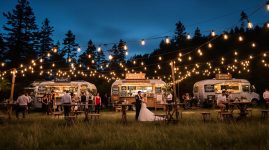
How to Coordinate Multiple Food Trucks Without Guest Confusion or Long Lines
Coordinating food trucks without causing chaos isn’t rocket science, but it does require a strategy. For every 200-300 guests, slot a food truck and stagger their openings to keep lines from resembling a mini-marathon. Assign each truck a specific role—mains, sides, dessert. Use loud, clear signage and menu boards nearly shouting their selections. Appoint a point person for communication among staff. Nail down contracts covering service times and minimums. Done right, you’ll avoid a culinary circus worthy of a reality show. Stick around to master the process.
Who this guide is for (multiple food trucks without chaos)
Tired of the food truck chaos? You’re not alone. Managing a multi food truck wedding logistics nightmare is no easy feat. Let’s break it down. Imagine this:
Feeling overwhelmed by food truck madness? Coordinating a multi-truck wedding is daunting, but it can be managed.
- Capacity Planning: One truck per 200-300 guests keeps lines manageable and vendors happy. More than that? Chaos ensues.
- Strategic Timing: Stagger the food truck timing wedding plan to avoid bottlenecks. You don’t want hangry guests, right?
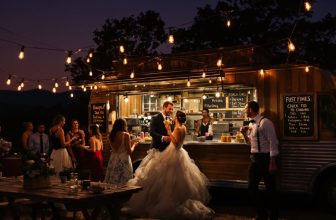
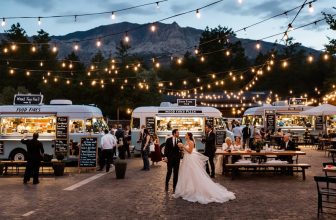
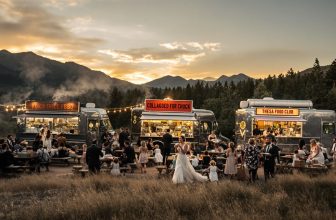
- Layout Coordination: Truck placement is key. Coordinate food truck service by avoiding traffic jams. No one wants a food truck mosh pit. Place food trucks around the perimeter to ensure optimal flow and minimize congestion.
- Vendor Communication: Clear communication with vendors guarantees smooth service. It’s not rocket science, just good planning.
These steps assist you in dodging the chaos, making your event the talk of the town—for the right reasons.
Quick takeaway: you need traffic control, timing windows, and a clear menu plan
Let’s face it, without traffic control, your event might as well be a circus. You need a strategy to keep things moving smoothly. Here’s a quick takeaway:
- Traffic Control: Create distinct routes and lanes for different traffic types. This avoids gridlock and keeps everything flowing. Think of it as creating a traffic symphony. Early coordination with local authorities is critical to ensure traffic management plans are effectively implemented.
- Timing Windows: Spread arrivals with staggered windows. This prevents a tsunami of guests all at once, keeping lines manageable.
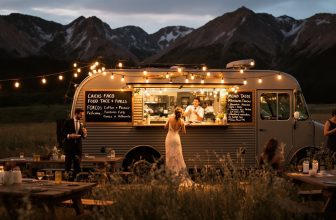
- Menu Planning: Clear signage with menus, pricing, and instructions. It’s like giving your guests a map to navigate their food journey without detours.
- Spatial Organization: Position food trucks for easy access and minimal congestion. Let’s not turn your event into a bumper car rally.
Step-by-step overview: coordinate multiple food trucks smoothly
Getting multiple food trucks to work at your event is like conducting an orchestra – you need precision and harmony. Without it, you risk guest confusion and long lines. Here’s how to master multi food truck wedding logistics and guarantee smooth several food trucks’ coordination:
Orchestrating multiple food trucks demands precision to avoid guest confusion and chaotic lines.
- Strategic Layout: Position trucks around the venue’s perimeter and in clusters, not scattered. This improves food truck guest flow and keeps lines manageable. Ensure all vendors have access to utilities for seamless operations and safety.
- Central Seating: Form inviting gathering spots with shared tables near vendors, allowing people to eat and socialize comfortably.
- Crowd Flow Arrangement: Angle booths and mark line areas to prevent queues from clogging pathways.
- Fire Safety Compliance: Keep clear emergency lanes and confirm vendors have fire extinguishers.
Nail these steps, and chaos will be mere fiction.
Step 1: choose complementary menus and assign each truck a role (mains vs sides vs dessert)
When it comes to choosing complementary menus and assigning each truck a role, you need more than just good taste buds—think strategic partnerships. To coordinate multiple food trucks at a wedding without chaos, align each truck’s selections with a clear, defined role. This isn’t just about variety; it’s about harmony and efficiency.
- Mains Truck: Focus on proteins like gourmet burgers or shawarma, drawing crowds with signature dishes—those are your showstoppers.
- Sides Truck: Opt for quick-prep carbs like tacos or rice bowls. They keep lines moving and guests happy.
- Vegetable/Salad Truck: Provide fresh, healthy options, catering to diverse dietary needs without competing with mains.
- Dessert Truck: Capture impulse buys with ice cream or coffee, wrapping up the experience with sweet satisfaction.
This approach simplifies multi food truck wedding logistics and delights your guests.
Step 2: build a service schedule (staggered openings, wave-based release, late-night)
Now that you’ve got the food truck roles set, it’s time to tackle the next big challenge: timing. You’ve got to create a service schedule that keeps guests munching happily without causing chaos. Consider staggered openings, where each truck begins service at different times. This prevents everyone from rushing at once. Use a wave-based release, allowing groups to order in phases, ensuring smoother flow. Late-night service can be a hit for night owls craving midnight snacks. Keep in mind that creating an operations schedule is crucial for avoiding mistakes and aligning your event goals with the logistical needs of your trucks.
| Strategy | Benefit |
|---|---|
| Staggered Openings | Reduces crowd congestion |
| Wave-Based Release | Smooths ordering process |
| Late-Night Service | Caters to night-time cravings |
Plan strategically, and your event will run like a well-oiled machine instead of a food truck frenzy.
Step 3: manage lines (tickets, signage, station maps, MC announcements)
Managing lines at a food truck event isn’t just about keeping people from getting hangry; it’s about orchestrating a symphony of movement and order. You need strategies that reduce chaos and create the experience seamless for everyone. Here’s how to do it:
- Digital Ticketing: Use a digital food passport system. Guests flash QR codes, and presto, credits are deducted without a hitch. It’s like magic, minus the wand.
- Strategic Signage: Place menu boards along the line. Assist indecisive folks decide quicker, boosting order speed.
- Station Mapping: Supply interactive maps showing truck locations. Clueless wanderers will thank you. This setup can be enhanced by integrating website integration features that allow attendees to access these maps directly from their mobile devices, ensuring they always know where to go next.
- MC Announcements: Keep guests informed with updates on wait times and unique deals. A well-timed announcement can work wonders in crowd control.
Step 4: solve the site logistics (parking, power, lighting, waste, bathrooms, weather)
Solving the site’s logistics might not sound glamorous, but it’s the backbone of any successful food truck event. You can’t just park trucks anywhere and hope for the best. It’s vital to plan for weather, permits, and basic amenities. Here’s what you need:
Planning logistics is crucial; you can’t park trucks anywhere and hope for success.
- Parking: Secure permits and make certain trucks are close to the venue entrance, especially if rain’s in the forecast. It’s not just convenient; it’s essential.
- Power and Lighting: Make sure vendors have the right connections. No one wants a dark, powerless truck. Assess terrain and accessibility to ensure food trucks can be parked securely and safely at the venue.
- Waste and Bathrooms: Arrange for enough waste bins and portable toilets. Overflow is not an option.
- Weather Preparedness: Confirm vendors can handle unexpected weather. A larger tent might save the day—and the event.
Step 5: coordinate staff and communication (point person, group chat, contingency)
When it comes to coordinating staff and communication for your food truck fiesta, having a well-oiled machine is non-negotiable. Here’s a sharp take on how to keep chaos at bay:
- Point Person: Appoint an Operations Manager or Event Coordinator as the go-to authority. They’re your decision-making powerhouse and troubleshoot on-site issues with vendors.
- Group Chat: Create a reliable group chat or communication channel—email, phone, or in-person—to keep everyone synced and aware of unique requests or themes.
- Real-Time Problem-Solving: Assign staff as contact points to swiftly tackle unexpected hitches like equipment failure or guest volume surges.
- Contingency Plans: Prepare for the worst. Backup strategies for late vendors or staffing shortages save the day. Food trucks offer a unique experience compared to traditional catering services, creating a fun, vibrant, and relaxed atmosphere at events.
Without these, expect chaos.
Step 6: finalize contracts (minimums, overage rates, service time, cancellation)
Finalizing contracts for your food truck event is where the rubber meets the road. Without clear agreements, you’re setting yourself up for chaos. Let’s break it down:
- Minimum Guarantees: You’re on the hook if sales fall below $750 on weekdays or $1,000 on weekends. Think of it as a safety net for the trucks, not a free lunch for you.
- Service Time: Standard service is 2 hours. Trucks should arrive an hour early—two if health inspections are needed.
- Cancellation Clauses: A written 30-day notice is standard. No one likes surprises, especially the kind that ruin your event.
- Attendance Estimates: Update headcounts thrice—Monday, 48, and 24 hours before the event. It’s about keeping the food flowing, not running out mid-party. The number of guests has a significant impact on the total cost and logistics, so it’s crucial to keep this information as accurate as possible.
Guest communication templates (menu board text, announcements, signage)
You’ve nailed the contracts, now let’s guarantee your guests actually know what to do when they roll up to your food truck extravaganza. Clear communication is your secret weapon. Here’s how to keep the chaos at bay:
Clear communication ensures guests are confident and chaos-free at your food truck event.
- Menu Boards: Use bold fonts and high-contrast colors for easy readability. Prioritize core dishes and prices. Skip the customer brain freeze.
- Digital Signage: Integrate QR codes on truck exteriors. Let guests access online menus via smartphone—no more squinting at tiny print.
- Event Announcements: Use vibrant, enticing language in email templates. Create that pre-event buzz and engagement. Email blasts are an effective way to reach a large audience quickly and enhance visibility for your food truck events.
- Visual Hierarchy: Employ mouthwatering photos and emphasize bestsellers. Customers love a good visual nudge.
Make information accessible, and watch those lines flow smoothly. Consider joining the Wedding Industry Professionals Association for networking and education opportunities that can further elevate your event planning skills.
Educational only: confirm venue permissions and city rules for mobile food vendors
Let’s face it: maneuvering the maze of permits and permissions for your food truck can feel like trying to solve a Rubik’s Cube blindfolded. Yet, mastering the art of compliance is non-negotiable. Here’s a quick guide to keep you on track:
- City Permits and Licensing: Don’t skip the Mobile Food Unit permit and Tax License. Chandler takes about 15 business days to process once you’ve dotted all i’s and crossed all t’s.
- Property Owner Permissions: Written consent from the property owner is a must-have, with their presence during operation hours.
- County Health Department: Secure a commissary agreement and county health approval before hitting the road. Remember, compliance with local/city regulations is essential before operating.
- Insurance Requirements: Confirm you have the right coverage, including General Liability and Auto Liability, especially for ADOT Rest Area operations.
Navigating these steps will save headaches and fines.