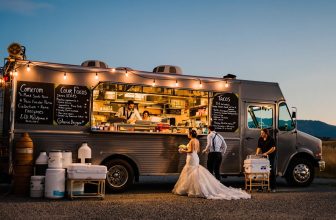

What Food Truck Wedding Catering Costs Versus Traditional (The Real Comparison)
For wedding catering, food trucks can be a cheaper option if you play your cards right. They usually cost $15-$35 per person, while traditional catering costs a staggering $50-$150 per head—ouch! But here’s the catch: food trucks have minimum guest counts, and you’ll need permits. Traditional can mean hidden fees: service charges, staffing, even kitchen fees. Nail the logistics, and you’re golden. Curious how to dodge hidden traps? Stick around.
Quick verdict: food trucks can be cheaper—but only when minimums, staffing, and speed match your guest count and venue flow
Let’s cut to the chase: food trucks can be a cheaper option for wedding catering, but only if you play your cards right. Comparing food truck vs traditional catering cost, you’ll find potential savings, but it’s not a slam dunk for every scenario.
Food trucks can save on wedding catering costs, but it’s not always guaranteed.
- Guest Count: Food trucks usually require a minimum of 50-75 guests. For larger events, expect costs to drop thanks to economies of scale. Transparent pricing from food truck vendors can help avoid unexpected costs.
- Staffing Costs: Food truck catering includes a smaller staff, which can save you from hefty service fees seen with traditional caterers.
- Service Duration: Standard food truck service usually lasts 2-3 hours, which can fit a cocktail-style reception better than a drawn-out dinner. Extended service times add $100-200 per additional hour, so it’s crucial to plan the event duration wisely to manage costs effectively.
At-a-glance comparison: food truck vs traditional caterer (cost, speed, rentals, risk)
When it comes to choosing between a food truck and traditional catering for your wedding, knowing the differences could save you a small fortune—or a big headache. Don’t be fooled by the marketing hype. Food truck vs traditional catering cost isn’t as straightforward as it appears. Let’s break it down:
| Aspect | Food Truck | Traditional Catering |
|---|---|---|
| Cost | $15–$35 per person | $50–$150 per person |
| Speed | Quick service | Requires coordination |
| Rentals | Minimal | Often needed |
Food truck catering comparison discloses savings potential, yet mobile catering cost comparison shows traditional catering may provide better value for larger events. Additionally, catering costs for different guest counts can significantly influence your choice, with traditional catering for 150 guests potentially costing between $10,000 to $20,000. Consider the logistical challenges such as managing lines and coordinating menus to ensure a smooth event. Evaluate your guest count and logistics to decide wisely. Choose wrong, and you might be serving up regrets.
Real cost drivers for food trucks (minimums, service time, staffing, permits)
You might think food truck catering is a no-brainer for saving money, but let’s get real about what drives those costs. Sure, food trucks scream “value,” but watch out for these hidden cost drivers:
- Minimum Booking Fees: For small gatherings, expect fees of $500–$1,000. Large events can hit $3,000, making the food truck vs traditional catering cost gap tighter than you’d think.
- Service Time Windows: Standard service is 2–3 hours. Overtime? That’s $100–$200 per hour. Not so cheap now, is it?
- Staffing and Permits: While staffing is leaner, permits can sneak in at $50–$200. Also, cuisine type plays a role in determining per-person pricing, with gourmet options typically costing more.
Food truck catering savings sound great, but a detailed food truck value analysis uncovers it’s not all sunshine and tacos.
Real cost drivers for traditional catering (staffing, rentals, service charge, kitchen fees)
While food trucks might appear like an easy way out of high catering costs, traditional catering has its own set of hidden expenses that can catch you off guard. You might think it’s straightforward, but consider these real cost drivers for traditional catering:
- Staffing Costs: You’ll pay overtime for staff if your event runs long—expect $50–$100 per hour per person for waitstaff and $30–$50 for bartenders.
- Service Charges: These are typically 15–25% of your total bill, covering logistics and breakage costs, not tips. It’s important to clarify with the venue what the service charge covers, as it may include setup, teardown, and administrative fees.
- Kitchen Fees: Need the venue’s kitchen? That’ll be $200–$1,000+ extra.
In the food truck vs traditional catering cost debate, these factors render food truck catering comparison more complex than it appears. Transparency in pricing is essential, as hidden fees often lead to client dissatisfaction and can derail financial plans during event preparation.
Cost table: example totals for 120 and 150 guests (three scenarios)
Understanding the real cost of catering options can feel like peeling an onion—layers of expenses keep appearing. When comparing food truck vs traditional catering cost, the numbers may surprise you. Let’s break it down with a food truck catering comparison for 120 and 150 guests. An important factor to consider is how a plated service might minimize food waste due to predetermined portion sizes, potentially saving you money in the long run.
| Scenario | Food Truck Savings | Traditional Cost |
|---|---|---|
| Budget (120 Guests) | $2,400 | $3,000 |
| Mid-Range (150 Guests) | $4,500 | $7,500 |
| Upscale (120 Guests) | $4,200 | $9,000 |
Food truck catering savings are evident, especially in budget and mid-range scenarios. You’ll notice food trucks provide premium experiences at a fraction of traditional costs. While marketed as affordable, food trucks can indeed provide genuine savings—if you know where to look. Consider this when planning your wedding. Buffet-style service, often associated with traditional catering, can range from $16-$22 per person, which highlights the potential for cost savings with alternative options like food trucks.
Guest experience comparison (lines, pacing, seating, dietary needs)
Steering the guest experience at a food truck wedding can feel like herding cats, especially when it comes to managing lines and pacing. You’ll need to juggle several elements to maintain a smooth flow. Consider these tips:
- Line Management: A single truck can serve 50-75 guests at a time. To prevent bottlenecks, have one truck for every 75-100 guests.
- Pacing: Food trucks require longer dining periods compared to traditional catering. Plan a service-by-table system to keep things running smoothly.
- Dietary Needs: With food trucks, menu customization is your friend. Pre-order through RSVPs to accommodate dietary restrictions efficiently.
While food truck catering might seem more cost-effective, the guest experience might not match the traditional catering flow. Food trucks can offer a cost-effective alternative to traditional catering options, appealing to couples seeking a unique and personalized dining experience.
When food trucks are a bad idea (tight timelines, strict venues, limited parking)
Managing the guest experience at a food truck wedding can feel like juggling cats, but that’s just the tip of the iceberg when considering whether food trucks suit your big day. Let’s explore why food trucks might not be the best fit:
Managing a food truck wedding feels like juggling cats—consider if they’re the best fit for your big day.
- Tight timelines: Food trucks need 6-12 months advance booking. Last-minute planners—beware! Additionally, coordinating multiple trucks for different courses requires meticulous planning to ensure smooth service transitions.
- Strict venues: Some venues have policies that outright ban food trucks, making your food truck vs traditional catering cost debate moot.
- Limited parking and accessibility challenges: A 30-foot truck needs ample space and clear access. Low branches or neighborhood laws can ruin your day faster than you can say “I do.”
Consider these factors before deciding on food truck catering. It might save you a headache.
Hybrid plan: trucks for late-night + catered dinner (best-of-both)
When you want the best of both worlds for your wedding, a hybrid plan combining food trucks for late-night snacks with a catered dinner might just hit the sweet spot. You get the elegance of a traditional dinner without the hefty price tag throughout the event. Here’s why it works:
- Cost Efficiency: Traditional dinner costs $70-$85 per person, while late-night food trucks run $10-$25 per person, providing a 30-50% potential savings over full-service catering.
- Guest Experience: Start with a formal dinner, then seamlessly shift to a vibrant, late-night atmosphere with casual, shareable bites. It’s a food truck catering comparison that thrills.
- Operational Flexibility: Food trucks operate independently, extending the celebration while keeping coordination smooth. You’ll enjoy the distinctive vibe only food trucks can bring without breaking the bank. Most food trucks also offer transparent pricing and guest minimums, which helps avoid unexpected costs. Food truck costs usually cover only food, unlike catering companies that include additional services such as linens and servers.
FAQ: food truck wedding questions
Thinking about adding a food truck to your wedding menu lineup? Great choice! But you’ve got questions, right? Let’s explore the nitty-gritty of food truck wedding catering.
- Cost Comparison: Food truck vs traditional catering cost isn’t just about price per plate. Sure, food trucks can save you up to 50%, with per-person costs often between $15–25 compared to traditional averages of $80. But watch out for extras like generator rentals and extended service fees. Additionally, regional differences significantly impact overall catering budgets, so it’s important to compare costs based on your location. Hidden costs like travel expenses and permit requirements can add up, affecting the final catering bill.
- Service Style: Food trucks provide casual, self-service vibes. Perfect if you’re aiming for a relaxed atmosphere.
- Logistics and Savings: Food truck catering savings shine when you consider reduced rental needs and the distinctive, memorable experience it presents. However, venues without power access may incur additional fees.
Decisions, decisions!