What Wedding Dresses Cost at Different Salon Types (Boutique vs. Chain vs. Sample Sale)
Looking for your dream wedding dress? Brace yourself—boutiques mean spending $2,000 to $8,000 for designer exclusivity. Picky service, hefty bills, predictable! Chain stores like David’s Bridal? Way friendlier to your wallet at $500–$2,000 with transparent terms. Bargain hunter at heart? Sample sales might shout your name under $1,000—watch out for alteration needs! Translation: create a quick decision and factor in potential extra tailoring costs. Dive deeper into the world of wedding dress shopping!
Quick verdict: boutiques cost more for curated designers and service; chains offer predictable pricing; sample sales can be cheapest but require fast decisions and more alteration risk
Let’s face it: if you’re looking for a wedding dress, your wallet’s in for a workout. When it comes to boutique vs. chain bridal pricing, the costs can vary greatly. Boutiques charge a premium for designer curation and personalized service, with prices ranging from $2,000 to $8,000. Meanwhile, chains like David’s Bridal provide more predictable pricing, typically between $500 and $2,000. Sample sales, though cheaper, demand swift decisions and come with alteration risks. The location of production also plays a crucial role, as dresses made in regions with lower labor costs can be significantly cheaper. Average cost per guest at weddings correlates with other wedding expenses, affecting how much couples can allocate to their dress budget. Here’s a quick bridal retail comparison:
Boutique dresses are pricey but personalized, while chains offer affordability and consistency. Sample sales? Act quickly, alterations await.
- Boutique Dresses: High costs, exclusive designers, personalized service.
- Chain Stores: Consistent prices, broad selection, off-the-rack convenience.
- Sample Sales: Bargains galore, but act fast and expect alteration challenges.
Ultimately, dress salon costs reflect your priorities and flexibility.
Cost table: boutique vs chain vs sample sale (gown range + typical alterations)
When it comes to choosing where to buy your wedding dress, the cost differences between boutiques, chain stores, and sample sales can cause your head to spin. Let’s break it down.
| Salon Type | Gown Range | Typical Alterations |
|---|---|---|
| Boutiques | $200–$10,000+ | $600–$1,200+ |
| Chain Retailers | $500–$2,500 | $400–$800+ |
| Sample Sales | Under $1,000 | $400–$800+ |
Boutiques present the high-end experience with prices to match. You’re paying for exclusive creations and exceptional service. Chain stores like David’s Bridal supply more predictable pricing—solid options without breaking the bank. Sample sales? They’re your bargain hunting dream, if you’re ready for the alteration gamble. Each wedding dress salon type cost reflects its distinctive value. Choose wisely! Keep in mind that tariffs on goods from countries like China, Vietnam, and India have increased prices by 10-30%, which can also affect the cost of dresses across all these options. Many brides are drawn to the timeless sophistication of the A1400 Collection, showcasing the kind of craftsmanship often found in higher-end boutiques.
What drives pricing differences (designer level, inventory risk, service model, exclusivity)
Understanding why wedding dress prices vary so wildly aids you formulate smarter choices for your big day. Let’s break it down:
- Designer Level: High-end designers like Vera Wang command $3,000–$10,000+ for prestige and craftsmanship. Boutique versus chain bridal pricing reflects this, with boutiques often carrying exclusive collections, driving costs up. High-end designers typically start at $5,000, showcasing premium materials and exceptional craftsmanship, which significantly influences the overall price range.
- Inventory Risk: Bridal salons face distinct challenges—no repeat customers means high marketing costs. This risk inflates bridal salon category pricing. Sample sales facilitate clearing inventory, cutting costs for you.
- Service Model: Customization and exclusive appointments at boutiques add costs. Expect fees for high-end experiences, unlike chain stores where mass production keeps prices around $500. Transparent pricing is crucial in wedding planning, just as it is for barn wedding venues to avoid hidden costs.
Navigating these factors guarantees you find the perfect dress without breaking the bank. Choose wisely!
Alteration cost realities by dress structure (beading, lace, corset, hems, bustles)
Alteration costs for wedding dresses can feel like a hidden trap waiting to spring on your budget, especially when you’re staring down the complexities of beading, lace, corsets, hems, and bustles. Whether you’re shopping boutique or chain, the alteration cost realities can be eye-opening. Here’s what you need to know:
- Hem Costs: Simple hems might run $85-$150, but add layers or lace, and you’re looking at $300-$500. Complex finishes? More dollars flying out of your wallet. To avoid rush fees that could increase costs by 25-50%, it’s wise to book your alterations 8-10 weeks before the wedding.
- Lace Complexity: Altering lace is no joke—expect to pay between $130 and $350. Precision and expertise don’t come cheap.
- Beading Work: It’s intricate and time-intensive, with prices soaring from $30 to over $800. Don’t underestimate the skill required.
Plan wisely!
All-in examples: total cost scenarios at 3 budgets ($1,500 / $3,000 / $6,000)
Let’s talk numbers because the sticker shock of wedding dress shopping is real. Steering through wedding dress salon types cost can be intimidating, especially when comparing boutique vs chain bridal pricing. Here are three all-in cost scenarios:
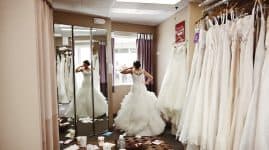
In-store gown try-ons provide real textures, colors, and movement. Experience how bodice supports posture and fabric drapes; gowns interact with Southern California lighting. Sample gowns offer convenience for brides with short timelines or immediate purchase desires. Essense of Australia offers timeless elegance with modern details in their wedding dresses.
| Budget | Scenario Details |
|---|---|
| $1,500 | Sample sale: Dress $800–$1,000, alterations $300–$500. Boutique pricing exceeds this budget. |
| $3,000 | Boutique: Dress $1,800–$2,200, alterations $700–$1,000. Sample sale: Dress $1,500–$1,800, alterations $500–$800. |
| $6,000 | Boutique: Dress $3,500–$4,500, alterations $700–$1,200. Sample sale: Dress $2,000–$3,000. |
For $1,500, sample sales shine. At $3,000, boutiques provide mid-range options. With $6,000, designer dreams come true. Consider these all-in cost scenarios carefully!
How to shop smart (appointment strategy, silhouette shortlist, fabric choices)
Shopping smart for a wedding dress isn’t just about finding the right gown; it’s about mastering the art of the appointment. With wedding dress salon types cost varying from boutique vs chain bridal pricing, strategize your dress shopping options to maximize success. Here’s how:
- Appointment Timing: Schedule weekday appointments to dodge the weekend madness. Aim for 12 months before your wedding, and guarantee your purchase is made 9 months out. Many salons offer personalized assistance with online stylists to help you find your dream dress.
- Silhouette Shortlist: Bring 5-10 inspiration photos, but stay flexible. Your consultant can guide you to styles that emphasize your shape and fit both your aesthetic and budget.
- Fabric Choices: Choose wisely! Light fabrics like chiffon for summer; structured Mikado or crepe for winter. Each option influences the gown’s look and feel. Weekday appointments tend to be less crowded, providing a more relaxed shopping experience and personalized attention from stylists.
FAQ: ‘Why are sample sales risky?’ and other common questions
Steering through the world of wedding dress shopping showcases its own set of challenges, and sample sales top the list with their enticing but risky propositions. While the allure of snagging a designer gown for $500-$1,500 is tempting, it’s crucial to understand the pitfalls. Sample sales, the chaotic cousins in the bridal salon category pricing, often hide:
Navigating wedding dress sample sales is tempting yet fraught with perilous pitfalls.
- Condition and Wear Concerns – Dresses are floor models with frayed hems and broken bustles. Be aware that additional expenses might arise from unexpected alterations, similar to surprise costs in barn weddings.
- Non-Returnable Final Sale Status – Forget returns; once you buy, it’s yours, imperfections and all.
- Limited Sizing and Structural Challenges – One size doesn’t fit all, leading to costly alterations.
While sample sales offer potential savings, it’s important to remember that the average U.S. bride spends approximately $2,000 on a wedding dress, which highlights the significant cost difference compared to other options. Sure, boutique vs chain bridal pricing differs, but sample sales demand caution. Choose wisely, and bring a magnifying glass.
Important notes (confirm your contracts and local pricing)
Before you get swept away by the excitement of wedding dress shopping, remember: contracts are your new best friend. You’d be surprised how many hidden fees can lurk beneath that lace and tulle. Ensure to:
- Get itemized quotes in writing—you need a clear breakdown of what’s included and what’s not.
- Ask about travel, overtime, extra events, and minimums—these can add up faster than you think.
- Confirm local pricing—a dress in Cincinnati won’t cost the same in New York City.
Custom-made designs can increase overall costs significantly, so it’s essential to consider this when budgeting for your wedding dress.
It’s crucial to have written documentation of all agreements to protect against unexpected charges and ensure transparency.
Don’t let surprises ruin your big day!
Pricing and inclusions vary by market and venue—get itemized quotes in writing
When it comes to wedding dress shopping, don’t just assume that the sticker price is the final word. Pricing and inclusions can vary dramatically by market and venue, so it’s crucial to get itemized quotes in writing. Think of it as your bridal armor against unexpected costs. At a chain like David’s Bridal, you’ll find dresses starting at $500, but remember, seasonal sales might shave a few bucks off. Boutiques, conversely, often exceed $2,000, thanks to exclusive collections and personalized service. Sample sales? They’re the wild card, with prices slashed but limited choices. Always ask for a breakdown of costs, including alterations and fittings. Designers set price points that bridal stores must honor, which can influence the range of available options. Don’t get caught up in a pricing whirlwind—be prepared and informed.
Ask about travel, overtime, extra events, and minimums before you pay a deposit
You’ve got your eye on that perfect gown, but before you hand over a deposit, let’s talk about those sneaky extras that can blow your budget. Bridal salons—whether boutique, chain, or sample sale—often have hidden costs that aren’t upfront. Ask about travel fees if your fitting isn’t local. Some salons charge overtime if your appointment runs long—who knew trying on dresses could clock overtime? Also, if you’re planning multiple fittings or alterations, check if there are extra charges for additional visits. Travel costs can be an important factor, as they are an often overlooked aspect of pricing for wedding services. And don’t forget about minimum order requirements; some boutiques demand a hefty deposit. It’s essential to get these details in writing. A clear contract will save you from unwelcome surprises and keep you on budget.