
Emerald vs. Sapphire vs. Ruby: Which Jewel Tone Costs Most to Execute?
When planning your wedding, brace yourself: Ruby tones can drain your wallet due to those high-demand, premium reds. Hello, budget buster! Emerald’s your friendly option with accessible greens and smart, metallic accents. Feeling blue? Sapphire’s got you covered with textiles and lighting—skip the rare blooms. Why gamble with your budget? Ruby’s like buying champagne on a beer budget, while emeralds and sapphires provide sensible, chic alternatives. Choose wisely, and the details create all the difference.
Quick verdict: ruby palettes can cost most when they rely on premium reds; emerald often uses accessible greens plus accents; sapphire can be affordable if it’s mostly textile-based (since true blue blooms are limited)
When it comes to choosing your wedding color palette, you might be surprised by how much the hue can affect your budget. Emerald wedding costs tend to be the friendliest on your wallet, thanks to the abundance of accessible greens. Conversely, ruby wedding pricing often skyrockets due to the demand for premium reds—talk about seeing red! The color saturation of rubies significantly influences their value, with more vibrant and vivid reds commanding higher prices. Sapphire wedding budgets sit comfortably in the middle, especially if you focus on textiles over those elusive blue blooms.
Emerald hues save cash, ruby reds raise costs, and sapphire finds a middle ground. Choose wisely for budget bliss!
- Sticker Shock: Ruby palettes can cost up to 25% more.
- Budget-Friendly: Emerald presents a lush look without breaking the bank.
- Middle Ground: Sapphire offers balance, but watch those bloom costs.
Choose wisely, and your wallet might just thank you.
Comparison table: emerald vs sapphire vs ruby (florals, linens, rentals, availability)
Though it might seem like just a splash of color, choosing the right jewel tone palette for your wedding can establish or break your budget. Let’s break it down: emerald, sapphire, and ruby. Emerald is the budget-friendly option, thanks to its accessible floral costs and rental availability. Sapphire, the middle child, balances unique linen pricing and event arrangement rentals without breaking the bank. But ruby? It’s the diva of the group—demanding a 25% premium for those luscious, in-demand florals. Notably, sapphires are recognized as the second most sought-after gems for engagement rings, following diamonds, highlighting their increasing popularity. When planning, consider that service charges typically add 15-25% to the total bill, affecting overall costs.
Here’s a snapshot:
| Jewel Tone | Floral Costs | Unique Linen Pricing |
|---|---|---|
| Emerald | $32K | Low |
| Sapphire | $35K | Moderate |
| Ruby | $40K | High |
Choose wisely; your wallet will thank you.
Ruby: cost drivers and smart substitutes (wine/burgundy, seasonal reds, fewer focal stems)
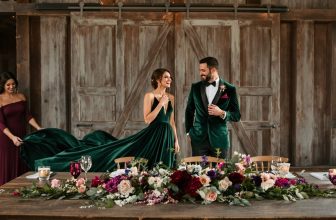
Red florals for weddings can drive up your costs faster than you can say “I do,” and ruby’s no exception. Jewel color pricing shows ruby blooms often spike emerald wedding costs, especially with premium red stems like peonies and garden roses. But don’t panic; smart substitutes can save the day. Seasonal reds: Opt for in-season blooms like red tulips in spring or dahlias in fall to dodge hefty import fees. Wine/burgundy shades: Choose ranunculus or garden roses in burgundy tones to keep the luxe vibe without the premium pricing. Fewer focal stems: Use hydrangeas to fill space—one stem equals six roses, slashing costs without skimping on style. Additionally, flower prices can be influenced by global supply chain complexities, so choosing local blooms can help avoid extra costs associated with transportation and refrigeration. Floral costs typically represent 10-15% of the overall wedding budget, so careful planning is essential to manage expenses effectively.
Emerald: how to get richness via foliage + metallics (lower floral pressure)
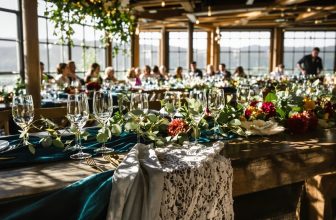
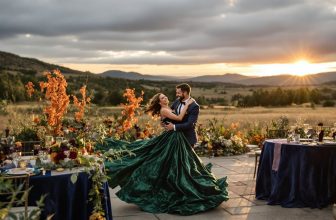
If you think emerald weddings mean spending a fortune on florals, think again. You can achieve rich, vibrant aesthetics without breaking the bank. Use foliage-forward arrangements and mixed metallic layering systems to produce breathtaking visuals. Emerald green pairs well with browns, beiges, and creams, creating a natural feel that enhances the overall rustic atmosphere.
- Texture: Velvet runners over contrasting fabrics and wooden details add depth without floral overload.
- Metallics: Mix estate sale silver and bronze candle holders for opulence without the price tag.
- Foliage: Evergreen boughs and eucalyptus act as budget-friendly fillers, cutting premium stem costs. To enhance your floral budget, focus on utilizing in-season plants and flowers to reduce costs by 25%.
Sapphire: how to achieve ‘blue’ with linens/lighting vs chasing rare blue blooms
Chasing rare blue blooms for your wedding? Don’t. Go for sapphire blue through lighting. Forget the emerald wedding costs when you can achieve the jewel tone color comparison with strategic illumination instead. Imagine your venue bathed in sapphire blue, creating a dramatic ambiance that flowers can’t compete with.
- Create an awe-inspiring atmosphere with stage lighting and uplighting, transforming spaces into turquoise or sapphire blue havens. Choose intelligent lighting for advanced options that offer dynamic effects tailored to your theme.
- Get an electrifying dance floor with sapphire blue neon signage. It’s unforgettable and surprisingly affordable.
- Complement with jewel-tone linens like deep velvet drapes, enhancing the lighting’s effect without the hassle of sourcing rare blooms.
Skip the floral chase. Embrace sapphire lighting for a remarkable, cost-effective wedding! One of the main advantages of using jewel-toned lighting is that it allows for customization and flexibility, enabling you to create a unique and memorable setting.
Decision checklist: pick the tone that matches your season and venue colors
You’ve got your sapphire lighting sorted and now it’s time to nail down the perfect jewel tone palette for your wedding season and venue. Choosing between emerald, sapphire, and ruby shouldn’t feel like rocket science. Let’s break it down: emerald’s the cheapest with a $32K average, perfect for spring with blush pink. For summer, emerald and coral establish a tropical vibe. Ruby? A pricier $40K for those passionate fall and winter settings. Sapphire sits in the middle at $35K, ideal for sophisticated winter elegance. Keep in mind that hidden fees can increase total costs by an additional 17-22%, impacting your overall budget.
- Spring: Pair emerald green with soft pastels for a rejuvenating garden vibe.
- Summer: Sapphire blue and hot pink light up an outdoor venue.
- Fall: Ruby red and mustard yellow for cozy warmth.
Make your choice and own it. By understanding color theory, you can create a visually appealing wedding palette that enhances the overall theme and mood of your special day.
FAQ: do jewel tone weddings require more lighting? (often yes)
Wondering if jewel tone weddings need more lighting? Absolutely. Deep, moody palettes like emerald, sapphire, and ruby demand strategic illumination. Otherwise, you’ll risk your venue looking more like a cave than a celebration. The cost of lighting can add up, yet it’s essential to enhance your jewel tones shine. Jewel tone weddings often incorporate neon lights to modernize the appearance and add a vibrant character to the celebration.
- Impact: Without proper lighting, jewel tones can look muddy, not opulent.
- Cost: Lighting ranges from $1,100 to $3,500 for a mid-sized wedding, influencing your emerald vs sapphire vs ruby wedding cost.
- Strategy: Soft, warm light enhances colors, while harsh light flattens them. Consider using uplighting to add depth and vibrancy to the venue’s colors, making them stand out elegantly.
Your emerald wedding costs might be lower, but don’t skimp on lighting. It’s the secret to highlighting those rich hues pop.
Important notes (confirm your local vendors, venue rules, and contracts)
You’re planning a jewel tone wedding, and it’s not just about picking pretty colors—it’s about nailing the details and avoiding costly surprises. Prices and availability can swing wildly depending on your market and season, so ensure you:
- Get itemized quotes in writing—trust us, your wallet will thank you later.
- Plan for weather and safety—because no one wants a soggy sapphire-themed reception.
- Create a real backup plan and buffers—those “what ifs” aren’t just for worriers, they’re for realists like you.
Don’t leave these to chance; get everything in black and white, and you’ll save yourself a lot of headaches. Additionally, because fine-quality rubies can exceed $1 million per carat, consider the significant investment and cost implications when selecting ruby accents for your event. Make sure to understand costs associated with various officiants, as they can vary significantly based on your chosen location and ceremony type.
Prices and availability vary by market and season—get itemized quotes in writing
Even though jewel tones are dazzling, the prices can be as unpredictable as a reality show plot twist. The cost of emeralds, sapphires, and rubies varies wildly by market and season. Fine-quality rubies can fetch up to $25,000 per carat, while premium sapphires and emeralds reach $200,000 and $1,125, respectively, depending on origin and treatment. With such volatility, you’ll want to lock in itemized quotes in writing. Vendors can surprise you with sudden price shifts or limited availability, especially for untreated stones or those from coveted regions like Burma or Colombia. High-value gemstones are highly sought after for jewelry, making them even more subject to market fluctuations. Don’t just take verbal estimates—get everything in black and white. This guarantees you’re not hit with unexpected costs or disappointments when planning your jewel-toned dream.
Weather and safety planning matter—build a real backup plan and buffers
While locking down those jewel-toned costs is important, let’s not forget about the weather and safety plans that can determine or break your big day. Imagine the horror of a sudden downpour on your outdoor wedding, with guests scrambling for cover. To avoid this chaos, establish a solid backup plan. Confirm your local vendors’ availability for emergency adjustments and guarantee your venue has clear rules on weather contingencies. Contracts should explicitly outline what happens if Mother Nature decides to crash your wedding. Don’t just rely on hope; construct financial and logistical buffers. Have alternative spaces ready, and know your cancellation policies. Remember, a well-prepared plan is like a hidden gem—often overlooked but priceless when needed. It’s also crucial to confirm vendor arrival times and services to ensure everything runs smoothly despite any unforeseen circumstances.