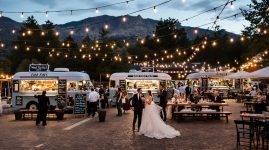
How to Coordinate Multiple Food Trucks Without Guest Confusion or Long Lines
To coordinate multiple food trucks seamlessly, focus on the holy trinity: menu simplicity, smart capacity management, and efficient queue arrangement. Keep menus straightforward—3 to 5 items max—to speed up service. Understand your trucks’ serving capacity; some handle 100-120 meals per hour, while others lag at 40-60. Strategic layouts, like staggered windows and clear signage, keep lines flowing. For less chaos and happier guests, these tricks are your new best friends. Curious about optimizing logistics? You’ll want to explore further.
Quick takeaway: multiple food trucks only work when you control menu choice, queue design, and service speed
Let’s face it, food trucks are the rock stars of the event world, showcasing a smorgasbord of flavors that can turn any gathering into a culinary festival. But with multiple mobile caterers, if you don’t coordinate food truck service properly, chaos ensues. Streamline menus to cut down on wait times and ensure food truck timing at weddings is on point. Organizers should also have their own insurance to cover event-related mishaps, ensuring a smooth operation.
Food trucks are event rock stars, transforming gatherings into culinary festivals. Coordinate wisely to avoid chaos.
- Use digital POS systems to track popular items and adjust selections
- Pre-package components during downtime to speed up service
- Consider self-service kiosks to minimize ordering chaos
- Employ virtual queuing with QR codes for less line clumping
- Space trucks wisely to prevent line interference
Master these elements, and you’ll have a seamless, delicious experience with no guest confusion.
Capacity math: how many guests per truck per hour (and why it matters)
When it comes to food trucks at your event, knowing how many guests each truck can handle per hour isn’t just a detail—it’s the backbone of smooth operations. You’ve got to nail the math to avoid chaos. Imagine the horror: long lines, hangry guests, and a wedding that’s memorable for all the wrong reasons. To coordinate multiple food trucks at a wedding efficiently, you need to take into account multi food truck wedding logistics and several food trucks coordination. Remember, long lines are often caused by insufficient trucks and complex menus, making it essential to plan carefully. Additionally, food truck minimums can impact how many trucks you choose to hire and their availability, so understanding these factors is crucial for proper coordination. Here’s a quick guide:
| Menu Type | Meals per Hour | Trucks Needed for 150 Guests |
|---|---|---|
| Fast-Service | 100–120 | 1–2 |
| Standard | 60–90 | 2–3 |
| Slow-Prep | 40–60 | 3+ |
Smart planning means happy guests. Don’t skimp on math.
Step-by-step: coordinate multiple food trucks without confusion or long lines
You’re organizing an event with multiple food trucks and want to avoid the chaos of long lines and confused guests? Here’s a straightforward plan to keep things smooth and efficient. Follow these steps and watch your event run like a well-oiled machine.
- Design a simple menu: Pre-select options that speed up service and reduce decision paralysis.
- Assign trucks to guest segments: Or stagger service windows to maintain an even flow.
- Build a queue plan: Use signage, barriers, runners, and a water station to keep lines moving.
- Confirm power and parking needs: Discuss generator requirements with the venue to avoid last-minute surprises. Ensure that there is adequate space for invited vendors to accommodate all the food trucks without overcrowding.
- Communicate the plan: Use announcements and signage to keep guests informed and engaged. Including a written agreement with each vendor can also help avoid misunderstandings and ensure everyone is on the same page.
Step 1: design a simple menu and pre-select options where possible
Are you tired of long lines and cranky customers at your food truck events? Let’s talk about how to coordinate multiple food trucks at weddings without a hitch. Start by crafting a simple menu that focuses on ingredient optimization. By limiting your menu to 3-5 main items, you streamline prep and maintain consistency. Guests appreciate quick service over endless choices, trust me. Thorough prep (mise en place) is critical for fast assembly during peak hours, ensuring you can serve your guests efficiently.
- Focus on core offerings: Simplifies multi food truck wedding logistics.
- Pre-prep ingredients: Saves precious minutes when the crowd’s thickest.
- Share components across dishes: Reduces inventory headaches and waste.
- Limit customization: Speeds up decision-making during peak hours.
- Choose festival-friendly recipes: Guarantee quick, efficient service.
Streamlining your menu not only assists you in managing chaos but also enhances guest satisfaction.
Step 2: assign trucks to guest segments or stagger service windows
Let’s face it, juggling multiple food trucks at an event can feel like herding cats, but it doesn’t have to be chaos. To coordinate multiple food trucks at your wedding, align trucks with guest segments or stagger service windows to keep things moving smoothly. Here’s how:
- Hardcore foodies: Kick off with tasting flights or exclusive chef items.
- Families: Present kid-friendly options early, with comfy rest areas nearby.
- Budget-conscious grazers: Supply affordable tasting portions and refill stations.
- Young professionals: Utilize quick service windows for premium takeaways.
- Industry pros: Efficient sampling showcases during peak hours.
Understanding your guest segments is crucial for effective coordination, much like how market segmentation helps businesses tailor their strategies to specific customer needs.
Step 3: build a queue plan (signage, barriers, runners, water station)
After you’ve assigned trucks to different guest segments or staggered service windows, it’s time to tackle the next big challenge: managing queues. Let’s face it, nobody wants a mob scene at their wedding. To coordinate multiple food trucks, you need a solid queue plan. Think digital signage and barriers to streamline multi food truck wedding logistics. Use these tools to keep the lines moving and the guests happy:
- Digital screens for wait times reduce guest irritation and abandonment.
- Floor markings guide guests and prevent congestion.
- Lightweight stanchions separate ordering and pickup areas to avoid chaos.
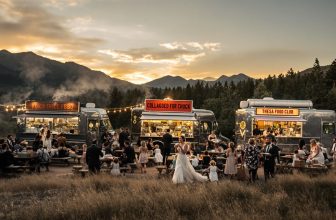
- Strategic vendor placement minimizes clustering and optimizes guest flow.
- Water stations keep guests cool and content while waiting.
- Implementing a self-service option can significantly reduce order processing time, ensuring guests are served quickly and efficiently.
This approach guarantees your multiple mobile caterers serve with style and efficiency.
Step 4: confirm power/parking/generator needs with the venue
Before you get too excited about setting up those trendy food trucks at your event, let’s talk logistics—because nothing says “party foul” like trucks stuck on muddy terrain or a generator failure shutting down the mac and cheese bar. Start by confirming power, parking, and generator needs with your venue. This isn’t just a box to check; it’s vital for a smooth event.
- Venue Approval: Confirm food trucks are allowed and check for any terrain restrictions.
- Power Supply: Verify available utility access or negotiate generator needs in your vendor contract.
- Parking Strategy: Position trucks along the event perimeter to avoid guest bottlenecks.
- Space Assessment: Confirm adequate parking and guest queue areas.
- Permit Compliance: Confirm all necessary permits are secured to avoid last-minute hiccups. For larger events, consider booking multiple trucks to prevent long wait times and ensure a variety of menu options.
Get these right, and you’re golden.
Step 5: communicate the plan to guests (announcements + signage)
You’ve got multiple food trucks lined up for your event, but how do you keep the chaos from overshadowing the culinary excitement? Communicating the plan to guests through announcements and signage is essential. Forgetting this step is like inviting confusion to your party. Start with clear, informative signage.
- Strategically place signs at entry points and parking areas to guide guests.
- Use directional arrows and visual markers to establish intuitive navigation.
- Showcase vendor names and menu previews prominently to aid quick decisions.
- Announce highlighted specials and wait times via a PA system for real-time updates.
- Engage guests with interactive signs or challenges to boost participation.
Ensuring happy customers is crucial for the success of your event, as satisfied guests are more likely to promote your event through word-of-mouth and social media. Don’t leave guests guessing; guide them to the flavors they crave with clear, direct communication.
Layout templates (one line vs two lines, staggered windows, ticket system)
When setting up food trucks, layout is everything. A smart layout can spell the difference between chaos and smooth service. Consider using a dual-line configuration. This allows vendors to serve from two windows simultaneously, reducing those dreaded wait times. Staggered window placement is another trick. By positioning windows to direct queues off to the side, you keep foot traffic flowing and prevent bottlenecks. Don’t forget to mark clear routes and use directional signage to guide your guests effortlessly. Clustering food vendors around a central seating area encourages social interaction and longer visits, increasing sales and enhancing the festival experience.
- Dual-line configurations: Serve from two windows at once.
- Staggered windows: Angle lines to avoid main walkways.
- Clear routes: Marked paths keep crowds moving.
- Clustered seating: Central spots encourage mingling.
- Multiple zones: Disperse vendors to avoid crowding.
Get it right, and you’ll have happy, well-fed guests.
Common pitfalls (complex menus, slow prep, payment delays, weather)
Even the best-planned food truck event can hit a snag when common pitfalls rear their ugly heads. Imagine juggling complex menus with varying cuisines—clam chowder and burritos? Talk about a sourcing nightmare! Overly broad options only complicate preparation and confuse guests. Without clear dietary labels, chaos ensues at the order window.
Slow kitchen prep is another headache. Manual order systems? Say hello to errors and delays. And when payment processing lags, service capacity shrinks, leading to abandoned orders. Pricing strategies should balance profitability with customer affordability, ensuring that guests feel they are getting value for their money.
Don’t forget connectivity issues. A single WiFi hiccup could halt operations. And guess what? Poor line management drives customers away.
- Complex menus lead to chaos
- Slow prep equals unhappy guests
- Payment delays cost you money
- Connectivity failures stop sales
- Poor line management kills return visits
FAQ: multi-truck logistics questions
How do you avoid turning your food truck event into a circus? It’s all about strategy. Think logistics, not chaos. Position trucks smartly around the venue perimeter to keep the central area open and avoid line clashes. Use clear signage to guide guests to their culinary destinations efficiently. Stagger menu releases to spread demand evenly. Want to dodge traffic jams? Plan guest flow like a pro. Ensure footpaths don’t turn into battlefields. Make sure to estimate the number of attendees expected so you can plan appropriately for space and resources.
- Space trucks apart: Allow multiple lines without bottlenecks.
- Separate foot and vehicle paths: Safety first, fun second.
- Adequate lighting: Evening events shouldn’t be dark mazes.
- Pre-event vendor talks: Avoid surprises.
- Trash cans galore: Keep the venue clean, always.
Get the logistics right, and your event will shine!