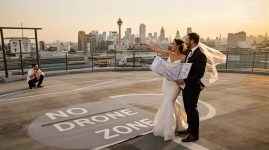
The Drone Restriction Map Wedding Couples Need (Major Metro Areas)
Maneuvering drone restrictions for wedding shoots in major metro areas isn’t for the faint-hearted. Start by checking if your venue’s in controlled airspace—hint: most inner-city spots ain’t drone-friendly without LAANC authorization. Parks, stadiums, airports? Yeah, no-fly zones. Want to avoid a fine or the dreaded wedding-day disruption? Map your venue’s airspace, confirm the venue’s drone policy, and triple-check local regulations. Stay sharp, sidestep the red tape, and guess what? Dive deeper to discover more.
Quick takeaway: drone restrictions are highly location-specific—verify airspace + venue permission before you book
Before you get swept away by the idea of drone shots capturing your perfect wedding day, take a moment to contemplate the not-so-small matter of airspace restrictions. Yes, those pesky wedding drone restrictions by location can influence or ruin your aerial dreams. It’s not just about having a drone—it’s ensuring you’ve navigated venue drone airspace rules and sorted out the drone permit requirements. Here’s a quick checklist to save you from any surprises:
Navigating airspace restrictions is crucial to avoid ruining your aerial wedding dreams with pesky drone rules.
- Venue Authority: Venues can ban drones outright, regardless of airspace classification. Always check with the wedding venue about their drone usage policies to avoid any last-minute disappointments.
- Municipal Permits: Some cities demand permits even if the FAA gives you a thumbs-up.
- Proximity to Airports: Within 5-10 miles? Expect Class B or C airspace headaches.
How drone restriction maps work (controlled airspace, parks, stadiums, airports)
Maneuvering drone restriction maps can feel like you’re trying to decode a secret language, right? It’s not just about finding a pretty spot for your wedding; it’s about traversing the maze of rules. Controlled airspace, national parks, and stadiums are notorious for their strict regulations. Let’s break it down:
- Controlled Airspace: LAANC authorization is a must near airports, except in Class G, where you’re free up to 400 feet.
- Stadiums: During game days, they become drone no-fly zones. No exceptions, even for the big leagues.
- National Parks: Forget it. Without a permit, your drone won’t see a single scenic view. Flying at weddings requires a remote pilot certificate to ensure compliance with regulations, and it’s important to avoid flying over guests who are not direct participants.
With this aerial photography restrictions map, you’ll avoid the headache of wedding drone restrictions by location.
Major metro examples: typical restriction patterns and what to check
Finding your way through the drone restriction maze in major metro areas feels like planning a heist without the getaway car. Steering through wedding drone restrictions by location means understanding aerial photography location rules and spotting drone no-fly zones weddings. Here’s a quick breakdown:
| Airspace Type | Restrictions |
|---|---|
| Class B Airspace | Strictest, near major airports |
| Class C Airspace | Moderate, secondary airports |
| Class G Airspace | Easiest, rural and suburban freedom |
Most restrictions come from airports, stadiums, and local permits. Venue cooperation and unrestricted airspace facilitate quicker planning for drone shows. If your heart’s set on aerial shots, Class G areas are your best bet—less red tape, more romance. Always check for municipal permits or venue rules. Think of it as a scavenger hunt with fewer prizes and more paperwork.
Step-by-step: how to verify your venue’s airspace legality
You want those epic drone shots at your wedding, but first, you’ve got to verify it’s legal. Start by pinpointing your venue’s exact coordinates and checking for any nearby airports or heliports—you don’t want to surprise a pilot. Then, get serious with official airspace tools and local regulations, and finally, confirm the venue’s policy and insurance requirements, because no one wants a wedding crasher in the form of a hefty fine. Remember, drones can create noise that disrupts ceremonies, so it’s important to avoid drone coverage during formal events to maintain a pleasant atmosphere.
- Find Coordinates: Locate your venue’s exact position and nearby airports/heliports.
- Check Airspace Tools: Use official resources to verify airspace legality.
- Confirm Venue Policy: Verify your venue’s rules and insurance cover drone use.
Step 1: find the exact coordinates and nearest airports/heliports
Curious how to secure your wedding venue is drone-ready without jumping through bureaucratic hoops? Start by pinpointing your venue’s exact coordinates and checking for nearby airports or heliports. This step is vital to avoid wedding drone restrictions by location that can lead to unexpected drone no-fly zones on your significant occasion. Don’t just assume your venue is in the clear; take action to guarantee compliance.
- Locate your venue on a map: Use GPS tools to find precise coordinates and note nearby airports.
- Check for Class B or C airspace: These drone no-fly zones wedding locations require FAA authorizations that are time-consuming. Flights are not permitted in certain restricted areas, especially near Washington, DC, where airspace restrictions are stringent.
- Consider helipads, too: They’re sneaky little zones where drones banned wedding can ruin your plans.
Step 2: check official airspace tools and local regulations
Let’s cut through the red tape and get to the heart of ensuring your wedding venue’s airspace is legal for drone use. Don’t let your dream shots crash and burn due to overlooked regulations! First, consult the FAA’s LAANC (Low Altitude Authorization and Notification Capability) for instant approval in controlled airspace. It’s your golden ticket near major airports. Next, explore the FAA DroneZone for centralized airspace authorizations. Don’t forget to review those sectional charts and airspace maps. They’re your crystal ball for spotting prohibited areas or spots needing Air Traffic Control (ATC) approval. Obtaining a Part 107 Certification is essential for capturing aerial shots and ensures that you can operate drones safely and legally at wedding gigs.
- LAANC: Instant approval for controlled airspace.
- DroneZone: Centralized platform for airspace requests.
- Sectional Charts: Identify prohibited and restricted areas.
Step 3: confirm venue policy and insurance requirements
Maneuvering the drone-friendly skies over your wedding venue feels like deciphering a treasure map. You’re not just asking if drones are allowed; you’re digging up essential details. Contact your venue directly to confirm their drone policy and insurance requirements. Some venues might surprise you and prohibit drones altogether. Others demand extensive paperwork.
- Insurance Minimums: Most venues require drone operators to have at least $1 million in liability coverage.
- No-Fly Zones: Double-check if your venue is in a no-drone zone, like near airports or military bases.
- Contract Clauses: Verify your contract outlines who grabs those necessary permits—don’t assume it’s the venue’s job. Ensure the wedding venue is FAA approved for drone use, as this is a crucial step in confirming the legality of drone operations at your chosen location.
Be ready to submit documentation and certificates of insurance, satisfying all their demands.
Step 4: plan alternatives if flights are prohibited (ground gimbal shots, elevated angles)
When drone flights get grounded, it’s time to get creative with your wedding videography. You can’t let no-fly zones steal the spotlight. Instead, go for ground-based gimbal shots and elevated angles to capture those unforgettable moments. Think of it as an opportunity to display your creativity rather than a setback. The FAA’s temporary flight restriction (TFR) over most of Chicago prohibits nongovernmental drone operations, so it’s important to have alternative plans ready.
- Gimbal to the rescue: Use a 3-axis gimbal for smooth, jitter-free footage. Walk slowly with bent knees—yes, like a ninja—to keep things steady.
- Elevated perspectives: Position cameras on rooftops or balconies. You’ll get that aerial view without breaking any rules.
- Parallax for depth: Glide past foreground elements, creating a dynamic, depth-filled shot that wows.
Who needs drones when you’ve got these tricks up your sleeve?
Planner checklist: questions to ask your drone operator (waivers, timing, weather plan)
While planning your wedding, don’t just assume your drone operator knows what they’re doing—interrogate them like a detective. Start with their FAA credentials. They must have the Part 107 Remote Pilot Certificate. No certificate? No deal. Insurance? Check if they carry at least $1 million in liability insurance. It’s not just about protecting you—it’s about protecting them too. Next up, timing. Drones need about 30 minutes to prep for flight. Plan around this, or your drone pics might clash with Grandma’s speech. Finally, grill them about the weather. A solid written policy is a must. Rain or high winds can ground flights faster than a poor wedding DJ. Remember, some wedding venues might have restrictions on drone usage, so it’s crucial to verify this with the venue beforehand.
- Certification: Verify FAA Part 107.
- Insurance: Confirm active liability coverage.
- Weather Plan: Get a written policy.
FAQ: ‘Can we get a waiver?’ ‘What if it’s illegal?’ ‘What about privacy?’
Ever wonder if you can snag a waiver to fly your drone over a wedding venue that’s in restricted airspace? It’s possible, but not simple. The FAA permits waivers for operations that don’t comply with standard Part 107 rules. This includes flights over people and in restricted zones. You’ll need to apply well in advance and prove the operation’s safety. Think it’s just a loophole hunt? Guess again.
- Illegal Flights: Flying without a waiver can lead to fines or legal disputes. Avoid the courtroom drama. Existing DJI drones remain legal for operation despite the ban on new models.
- Privacy Concerns: Capture footage responsibly. Filming without consent breaches privacy laws.
- Complex Airspaces: Coordination with Air Traffic Control is essential in Class B, C, and D zones.
Your wedding memories are precious; make certain your drone operator follows the rules.
Educational only: always follow current aviation rules and venue policies
Let’s get real: flying drones at weddings isn’t just a whimsical techie dream; it’s a regulatory minefield that you need to navigate with precision. You can’t just launch your drone and start snapping pics. Nope. You’ve got to follow the rules, or risk crashing into legal trouble.
- Check Airspace Classification: Know your Class B from your Class G. Big airports mean big restrictions. Drone shows must occur in darkness, typically starting at 9 p.m. or later in the summer, and around 5-6 p.m. in the fall/winter.
- Verify Venue Policies: Some venues flat out ban drones. Always ask before booking.
- Stay Certified: Part 107 certification isn’t a suggestion—it’s a requirement for commercial use.
Don’t assume your wedding venue is drone-friendly just because it looks perfect from the air. Double-check local ordinances and venue rules. Trust me, it’s better than having your drone grounded!