9 Fall Wedding Ideas With Transparent Vendor Costs and Peak Season Premiums
Planning a fall wedding? Brace yourself—43% of all weddings happen September-November, cranking up vendor fees. October’s high demand can inflate costs by 25-35%, especially for Saturdays. For decor, expect $150-$300 per centerpiece, and fall-inspired photos can tack on $500-$1,200. Fancy an apple cider bar? That’s $300-$600. But November is your cost-effective sweet spot! Ready to discover ways to manage these snags and devise magic without breaking the bank? Let’s go!
Who this fall wedding idea list is for (realistic vendor costs + peak-season premiums)
If you’re planning a fall wedding and looking to avoid the financial pitfalls, you’ve come to the right place. Embracing autumn wedding costs can save you a bundle. Did you know that fall wedding pricing is about 6% less than the national average? Sure, October’s premiums might spike those costs by 25-35%, but November provides a sweet spot with just a 4.8% dip below average. Here’s a quick peek at what savvy couples prioritize:
- Weekend winter dates: A cool 20-30% vendor cost savings.
- Vendor negotiation: Lower demand equals better deals.
- Personal fund contributors: 88% of you will appreciate reduced costs.
- Skipping social media pressure: Say goodbye to viral trend overspending.
- Including strategic timing for your wedding can enhance the likelihood of securing discounts and staying within budget.
- Realistic budget planning: Avoid unexpected financial kicks in the wallet.
For example, choosing a wedding venue in Texas could cost significantly less than in California, with potential savings ranging from $1,500 to $4,000 depending on the location and guest count.
How fall pricing works (demand premiums, limited Saturdays, vendor minimums)
While autumn may seem like the perfect backdrop for your wedding, it’s not all falling leaves and cozy vibes. Fall wedding pricing can shock you with its demand premiums and limited Saturdays. A whopping 41% of weddings happen from September to November, driving up costs. October is the priciest, with premiums of up to 35%. And those Saturdays? They’re gold. Couples are increasingly opting for unplugged ceremonies, which have become a popular choice, reflecting a desire for distraction-free vows during this bustling season.
Fall weddings are popular but pricey, with October’s peak premiums and coveted Saturdays.
- October’s 35% premium: It’s the peak of fall vendor pricing.
- Saturday scarcity: Everyone wants it; few can afford it.
- Sunday savings: Consider it—20-30% cheaper.
- Vendor minimums: Brace yourself—negotiation is key.
- Regional disparities: New York vs. Nebraska—your autumn wedding budget changes drastically. Keeping the guest list under ten can help avoid per-person catering charges, reducing overall wedding expenses.
Plan wisely, and perhaps you’ll snag that picturesque, affordable fall wedding.
The full list (9 fall wedding ideas with transparent vendor costs and peak season premiums)
You’re about to reveal a treasure trove of fall wedding ideas, complete with transparent vendor costs and those pesky peak season premiums. We’ve got everything from rich burgundy and burnt orange florals to cozy apple cider stations, all while giving you the lowdown on where those extra charges sneak in. Ready to create your autumn nuptials both breathtaking and budget-savvy? Let’s get started.
- Burgundy and burnt orange florals: Dahlias, ranunculus, and autumn foliage centerpieces ($150-$300 each), plus linens at $15-$35 per table.
- Pumpkin and gourd tablescapes: Mini pumpkins ($2-$5 each) and velvet table runners ($20-$40 rental).
- Apple cider bar station: Setup ranges $300-$600, with donut showcases at $3-$5 per dozen.
- Outdoor ceremony with foliage backdrop: Venue premiums can add 10-20% during peak weekends, with ideal photography during golden hour.
- Harvest farm table reception: Farm table rentals cost $75-$150 each, and vineyard venues can set you back $3,000-$8,000. With venue and catering typically consuming over half of the total wedding budget, managing these expenses wisely can significantly impact your overall costs. Full-service catering can range from $100 to $150+ per person, making cost transparency essential for accurate budgeting.
Burgundy and burnt orange color palette – Florals $150-$300/centerpiece featuring dahlias, ranunculus, and autumn foliage; linens $15-$35/table rental; bridesmaid dresses in these tones widely available $100-$200: includes typical vendor cost ranges + where fall premiums show up (venue/florals/photo)
Let’s face it, planning a fall wedding can be a financial juggling act, especially when you’re eyeing that dreamy burgundy and burnt orange color palette. While these colors establish a breathtaking backdrop, understanding the fall wedding ideas with transparent costs is essential. Florals alone can run you $150-$300 per centerpiece, featuring dahlias, ranunculus, and autumn foliage. Add $15-$35 for table linens, and don’t forget bridesmaid dresses, which are widely available from $100-$200. Burgundy and burnt orange create a warm atmosphere, making them key for wedding planning success. October wedding costs can spike by 25-35%, making fall wedding pricing a serious consideration. Peak season premiums hit hard, particularly for venues and florals. So, unless you’ve got a secret money tree, meticulous planning and transparency with vendors are non-negotiable.
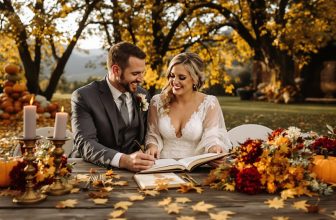
Pumpkin and gourd tablescapes – Mini pumpkins $2-$5 each (buy wholesale for 50+ at $1-$2); velvet table runners $20-$40 rental; brass candlesticks $3-$8 rental; peak season October means venue availability may require booking 12+ months ahead: includes typical vendor cost ranges + where fall premiums show up (venue/florals/photo)
Creating the perfect pumpkin and gourd tablescape for your fall wedding can be both enchanting and budget-friendly if you play it smart. Go for mini pumpkins, priced at $2-$5 each, or snag a deal by buying wholesale—50+ at just $1-$2 each. Velvet table runners set the stage at $20-$40 per rental, adding that touch of luxe. Throw in brass candlesticks for $3-$8 each to elevate the look. But know this: October is peak season. Venue availability is tight, demanding booking 12+ months in advance. It’s a jungle out there, with venues hiking rates by 20-30% during peak months. Consider off-peak dates for savings, or face inflated costs in the name of autumnal romance. Winter weddings account for nearly 15% of annual bookings, offering more flexibility and potential cost savings for those open to cooler celebrations. Choose wisely.
Apple cider bar station – Setup $300-$600 includes warmer, cups, garnishes; caramel and cinnamon add-ons; pairs with donut display ($3-$5/dozen wholesale); September-October peak apple season for freshest options: includes typical vendor cost ranges + where fall premiums show up (venue/florals/photo)
An apple cider bar station at your fall wedding? It’s a cozy, charming addition that screams autumn. For setup, you’re looking at $300-$600. That covers a warmer, cups, and garnishes. Want to spice things up? Add caramel and cinnamon add-ons. Pair it with a donut showcase at $3-$5 per dozen wholesale for a perfect match. But here’s the kicker: September and October are peak apple seasons. Fresh cider is at its best, but expect vendor premiums—venues, florals, and photography may hike prices. You’ll need to budget wisely. Booking early can assist in dodging those premiums. So, if you’re thinking apple cider, plan carefully, and keep an eye on those costs. Your taste buds will thank you! Consider incorporating custom cocktail design into your event, as this service is readily available and can enhance your guests’ experience with personalized drink options.
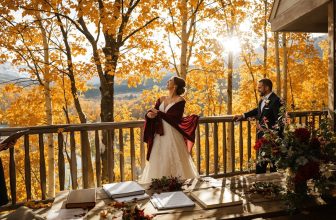
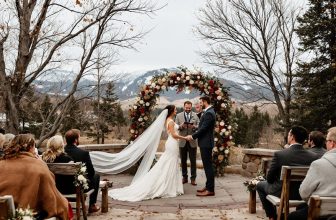
Outdoor ceremony with fall foliage backdrop – Peak leaf color varies by region (mid-September to late October); venue premium 10-20% during peak weekends; backup indoor option recommended; photography golden hour timing ideal: includes typical vendor cost ranges + where fall premiums show up (venue/florals/photo)
Thinking about cozy apple cider bars and donut exhibitions? If so, an outdoor ceremony with a breathtaking fall foliage backdrop might be the perfect setting. Peak leaf color varies by region, from mid-September to late October, and venues know it. Expect a 10-20% premium on peak weekends. A backup indoor option is a smart move, just in case Mother Nature decides to be unpredictable. Don’t forget that golden hour – those magical 1.5 to 2 hours before sunset – is prime time for capturing those perfect photos. In the Midwest, sunsets range from 5:30 to 6:30 PM. Golden hour provides soft, golden, and flattering light, smoothing out shadows and adding warmth to skin tones. Vendors can charge extra for florals and photography during this season, so plan accordingly. This picturesque setting isn’t cheap, but it’s unforgettable.
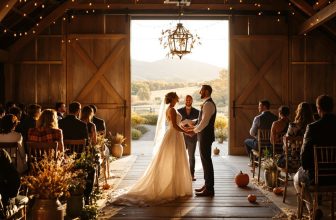
Harvest farm table reception – Farm table rentals $75-$150/table; burlap or linen runners $10-$25; vineyard or barn venues $3,000-$8,000 average; October Saturdays book 12-18 months ahead: includes typical vendor cost ranges + where fall premiums show up (venue/florals/photo)
While everyone loves the idea of a harvest farm table reception, let’s face it, these setups come with a price tag that can cause your wallet to weep. Farm tables rent for $75-$150 each, and don’t forget transportation and setup fees that add another 15-25%. Want burlap or linen runners? They’re $10-$25 per table. Choosing a vineyard or barn venue? You’re looking at $3,000-$8,000 on average. October Saturdays are the hot ticket, booking 12-18 months in advance, with prices skyrocketing by 15-25%. As if that’s not enough, floral costs leap 25-35%, and photographers charge $500-$1,200 extra for those golden fall shots. Plan wisely, or you might find yourself in a financial autumn storm. It’s important to note that venue and catering typically account for 40-45% of total wedding expenses, so allocating your budget effectively across major categories can help manage costs.
S’mores bar or fire pit station – Fire pit rental $150-$300; s’mores supplies $3-$5/guest; blanket favors $8-$15 each; requires outdoor venue with fire permits; October evening events may need heating: includes typical vendor cost ranges + where fall premiums show up (venue/florals/photo)
Let’s face it: a s’mores bar or fire pit station at your fall wedding is the type of cozy charm guests love, but it comes with a price tag that might just cause you to sweat more than the fire itself. Renting a fire pit can cost $150-$300, while s’mores supplies run $3-$5 per guest. Don’t forget blanket favors at $8-$15 each. Outdoor venues need fire permits, and October evenings might require extra heating. Costs skyrocket if using professional rentals, with shipping fees outside NYC and a $149.99 attendant deposit. If you’re planning to host your event in Manhattan, be prepared for an additional $40.00 garage fee unless parking is provided. DIY might save you some cash, but gourmet toppings and unique ingredients can add up. Weigh these costs before setting your wedding alight with marshmallow magic!
Jewel-tone velvet bridesmaid dresses – Dresses $100-$250 in emerald, ruby, sapphire; velvet fabric adds luxury look; mix-and-match styles trending; coordinate with copper or gold accessories: includes typical vendor cost ranges + where fall premiums show up (venue/florals/photo)
Jewel-tone velvet bridesmaid dresses are the epitome of luxury and style, without completely obliterating your wedding budget. These dresses, ranging from $100 to $250, come in rich emerald, ruby, and sapphire. Velvet fabric adds a touch of opulence, and with mix-and-match styles trending, your bridal party can look cohesive yet individual. Pair these jewel tones with copper or gold accessories for a seamless look. But brace yourself: fall weddings come with peak season premiums. Venue costs skyrocket in September and October, with Saturdays being the priciest. Photography and floral arrangements also hit their peak, especially in high-demand areas like California and New York. For those marrying in the fall, it’s a balancing act of style and budget. Consider venues like the Wythe Hotel, where the food and beverage minimum is $45k, to get a sense of the premium costs associated with chic and modern spaces.
Pie bar instead of wedding cake – Pies $15-$30 each (serves 6-8); variety of 8-10 pies for 100 guests $200-$400; display stands $50-$100 rental; local bakery or family recipes add personal touch: includes typical vendor cost ranges + where fall premiums show up (venue/florals/photo)
Forget about those jewel-tone velvet dresses for a second and imagine this: a pie bar at your wedding instead of a traditional cake. It’s a distinctive, cost-effective alternative. With pies priced between $15-$30 each, serving 6-8, you can provide a delightful variety for 100 guests at just $200-$400. Compare that to the average wedding cake cost of $700-$1,100 nationally. Renting showcase stands will set you back $50-$100, but they’ll elevate your presentation. Mix in local bakery pies or family recipes for a personal touch. Plus, pie bars dodge the peak season premiums seen with venues and florals. Forget cake-cutting fees—pies are served without the fuss. A sweet win for your fall wedding!
Copper and rose gold accents – Copper chargers $3-$5 rental; rose gold flatware $2-$4/setting rental; geometric terrariums $10-$20 purchase or $5-$10 rental; coordinates with burgundy/blush florals: includes typical vendor cost ranges + where fall premiums show up (venue/florals/photo)
While some might think copper and rose gold are just trendy buzzwords, they actually pack a punch when it comes to fall wedding decor. Envision this: copper chargers renting for $3-$5 each, adding an elegant touch without breaking the bank. Pair them with rose gold flatware, renting at $2-$4 per setting, and you’ve got a breathtaking tablescape. Want to add a modern twist? Geometric terrariums are a great choice, costing $10-$20 to purchase or $5-$10 to rent. Consider incorporating fall wedding rose petals available in rose gold, copper, rust, and champagne to enhance your deco. Fall weddings can see vendor costs spike, especially in October with premiums up to 35%. So, planning around burgundy and blush florals that coordinate with these metallics can maximize your budget. Opt for early November dates for slight savings, avoiding peak season premiums.
Cost comparison table: same wedding size in fall vs spring (line-item differences)
Let’s face it, wedding planning is stressful enough without the surprise of fluctuating costs between seasons. You’re not imagining it—prices do change. Fall weddings often cost less than spring, thanks to less demand and lower vendor fees. Check out the numbers:
| Item | Fall (October) | Spring (May) |
|---|---|---|
| Venue & Site | $8,573 | $9,000 |
| Catering | $6,927 | $7,200 |
| Photography | $4,400 | $4,600 |
In October, you might spend around $33,500, while May tends to hit $33,900. That’s not chump change. The savings in fall, especially November and December, can be significant. Late fall through early spring is considered off-season for weddings, which means venues and vendors often offer more affordable rates due to reduced demand. If you’re considering a brewery wedding for its industrial-chic atmosphere and budget-friendly options, fall might offer even greater savings. So, if you’re looking to cut costs without sacrificing style, a fall wedding might just be the ticket.
Where to splurge vs save in fall (heating, lighting, florals, timing)
Planning a fall wedding is all about knowing where to splurge and where to save, and lighting is a place you might want to open your wallet a bit more. Fall evenings get dark early, so you’ll need to establish a cozy atmosphere with lighting. Think of it as buying ambiance insurance.
Splurge on lighting for your fall wedding; it’s your ambiance insurance for those early dark evenings.
- Uplighting: Perfect for ballrooms, costing $700-$2,000, it can transform a dull space into a magical evening. DIY uplights can offer a cost-effective solution for those working with smaller venues on a tight budget.
- String Lighting: At $3-$5 per linear foot, these add charm and warmth.
- Monogram Gobo Lights: For $200-$300, splash your initials across the dance floor.
- Pin-Spot Lighting: Spotlight your cake for just $25-$35 per fixture.
- Labor Costs: Expect $400-$800 for setup, but it’s worth the hassle-free glow. Professional lighting can significantly enhance the overall aesthetic of your wedding decor, ensuring that every detail is showcased beautifully.
Save your pennies for these glowing essentials!
Planning checklist (weather, golden hour timing, indoor backup, guest comfort)
You’ve got the lighting all figured out, but let’s not forget that planning a fall wedding means juggling a few more balls in the air—namely, the unpredictability of weather, the fleeting daylight, and ensuring your guests aren’t freezing their tails off. Forget to plan for these, and your dream day could turn into a shiver fest with blurry photos.
- Check sunset times: Fall sunsets are tricky, so nail down the exact time on Timeanddate.com.
- Schedule the ceremony smartly: Start 2–3 hours before sunset for that perfect golden glow.
- Consider a first look: Capture key photos early and stress-free.
- Temperature-proof your event: Heaters and indoor options are non-negotiable. Consider the hidden costs associated with barn venues, such as additional rentals and utilities, to ensure there are no surprises in your budget.
- Rain plans matter: Don’t let a slight drizzle ruin everything. Fall weddings are increasingly popular, with October being one of the most in-demand months due to its cooler temperatures and stunning fall scenery.
FAQ: ‘How much more is fall?’ and best dates to avoid premiums
Even though fall weddings have a magical allure, the cost might cause you to question your choices. October, the darling of fall weddings, demands a hefty 25-35% premium. It appears popularity comes with a price tag. November provides a more wallet-friendly option with just a 10-15% bump. But hey, who needs an October wedding when November is 4.8% below the national average? Here’s a cheat sheet to dodge those costly pitfalls:
- Saturday premium: Want a deal? Avoid Saturdays.
- October Saturdays: The priciest time of the year.
- Weekday weddings: Cut costs by 20-60%.
- Northeast/Midwest deals: Score savings in winter months.
- Texas Hill Country: Winter months provide 20-40% off.
Destination wedding planning can increase overall costs with additional fees for travel, logistics, and coordination. Choose wisely, and your budget will thank you!
Important notes (confirm your vendor quotes and policies)
Don’t get caught off guard with unexpected wedding costs—it’s essential to confirm vendor quotes and policies in writing. Prices can vary wildly based on region, season, and service level, so ensure you know exactly what you’re paying for. Remember, the devil’s in the details, and those hidden fees can sneak up on you faster than a bouquet toss. When budgeting for catering, consider the service style as it significantly impacts overall costs and labor requirements.
- Itemized Quotes: Demand quotes that break down every cost, from floral arrangements to catering.
- Minimums & Zones: Look out for minimum spending requirements and additional charges based on transport zones.
- Rush Fees: Check if last-minute changes come with extra fees—because they probably do.
- Service Charges: Understand all service charges before putting down that deposit. Scammers use stolen identities and falsified event details to create fraudulent inquiries, which can lead to wasted time and poor business decisions.
- Written Confirmation: Always get everything in writing to avoid any “I thought we agreed on this” moments.
Prices vary by region, season, and service level—get itemized quotes in writing
When planning your fall wedding, understanding the regional, seasonal, and service level cost variations is essential—otherwise, you’ll be in for a rude awakening when the bills start rolling in. October weddings cost 25-35% more than early November ones. Different regions also have their own pricing quirks. Northeast venues, especially Manhattan, can empty your wallet faster than a bad habit. Meanwhile, Southern states provide more bang for your buck. But it’s not just geography. Service level matters too. A full-service planner might cost over $4,000, but the day-of coordinator will save you a good chunk. Always demand itemized quotes in writing. Verbal agreements are about as reliable as a sandcastle in a hurricane. Protect your budget and sanity. On average, guest count significantly impacts wedding costs, with couples inviting more guests tending to spend more overall.
Watch for minimums, delivery zones, rush fees, and service charges before deposits
Planning a fall wedding involves more than just picking the perfect color palette or finding a dreamy venue; it’s a financial chess game where every move can cost you. Before you commit to any deposits, watch for sneaky minimums and extra charges. Venues often demand you pay for a set guest count or a minimum food and beverage amount—yes, even if fewer guests show up. Distribution zones and setup fees can unexpectedly add $200-500 per vendor to your budget. Venues may earn commissions from couples hiring recommended vendors from their preferred list, which can affect vendor pricing and overall costs. Don’t forget the rush fees; contracts signed within two weeks of your date could cost you at least $75 extra. And those service charges? They’re automatic and typically tack on 18-25% more, excluding gratuities. Read the fine print, folks.