
Fresh Florals vs. Dried Arrangements: Which Costs Less for Terracotta Weddings?
Looking to save on your terracotta wedding florals? Dried arrangements may be the ticket. Sure, fresh blooms have a temporary charm, but they can cost up to $5,000, while dried alternatives range from $1,200 to $2,000. Go DIY, save more, and they’re reusable! Fresh flowers wither quickly, whereas dried ones stick around, making them budget-friendly in the longer run. Want a strategic mix of savings with aesthetic appeal? There’s more you can explore!
Quick verdict: dried can cost less when reused and bought early, but fresh can be cheaper for simple centerpieces—total cost depends on labor, storage, and how much volume you need
If you want bang for your buck at a terracotta wedding, dried florals might just be your new best friend. Sure, fresh flowers have that vibrant allure, but let’s talk fresh versus dried pricing. Dried florals can save you 40-60% of your budget—seriously, that’s a lot. Here’s the lowdown:
- Dried floral savings: A $1,200-$2,000 budget with dried arrangements beats $3,000-$5,000 for fresh.
- Floral format comparison: Dried wins when reused and purchased early.
- Fresh simplicity: For simple centerpieces, fresh might cost less.
- Total cost factors: Consider labor, storage, and volume needs. For those who opt for the Sunset Terracotta Bridal Flower package, the rental cost of $300 might be a convenient alternative to buying fresh or dried flowers.
Side-by-side table: fresh vs dried (cost, longevity, risk, labor, photo look)
When you’re planning a terracotta-themed wedding, the floral choices can feel as intimidating as picking the perfect dress. You’re probably weighing fresh vs dried florals terracotta options, and it’s no small decision. On cost, dried flower costs are a clear winner. A bridal bouquet could set you back $150–$500+ with fresh florals, whereas dried versions cost just $50–$250. Longevity? Fresh flowers last 3-7 days, while dried arrangements stand the test of time. However, consider the fragile nature of dried flowers—they’re not great for enthusiastic hugs. Fresh blooms present vibrant colors and irresistible scents, but they wilt and fade in the sun. Given the challenges in the floral economy, many couples are opting for dried arrangements not only for their cost-effectiveness but also for their lasting durability. Floral costs typically represent about 10% of the overall wedding budget, which is why many couples are looking for more affordable alternatives.
| Aspect | Fresh Florals | Dried Arrangements |
|---|---|---|
| Cost | Higher | Lower |
| Longevity | Short-term | Indefinite |
| Photo Look | Vibrant, fragrant | Boho, stable |
Where dried saves money (reuse across events, DIY-friendly, off-season stability)
Let’s be real: fresh florals might cause your wallet to weep. But when it comes to fresh vs dried florals terracotta weddings, dried arrangements provide major savings. Here’s how:
- Reuse Across Events: Dried florals can be reused for multiple events, reducing dried flower costs over time. Unlike fresh blooms, they won’t wilt after one use. Dried arrangements are less affected by venue restrictions, which can limit the use of fresh flowers at certain locations.
- DIY-Friendly: Flower Moxie’s DIY packages let you save by assembling your own arrangements. Fresh flowers require extra purchases, but dried ones let you mix and match.
- Off-Season Stability: Dried flowers don’t care about the season. Fresh flowers spike in cost off-season, while dried ones remain stable. Flower substitutions may occur due to weather or availability, but dried arrangements avoid these fluctuations.
- Substitution Savings: Swap expensive fresh blooms with dried baby’s breath, saving big on the dried versus fresh flower cost.
Where dried costs more (premium preserved stems, shipping, fragility, large installs)
While dried florals might seem like a budget-friendly choice for your terracotta wedding, don’t let the initial allure fool you—there’s a hidden price tag. Dried flower costs can sneak up on you, especially when you consider:
- Premium preserved stems: Specialized handling like drying and dyeing renders preserved terracotta hydrangeas and pampas grass costly, with bouquets reaching $50–$250.
- Shipping and fragility: Dried arrangements need protective packaging, driving up expenses. Expect to pay $10.56+ for shipping.
- Large installs: Achieving lush visuals with dried stems requires more material, increasing labor and expenses compared to fresh flowers.
- Longevity concerns: Ongoing storage to prevent deterioration adds another layer of cost—unlike fresh, which are temporary.
Terracotta-specific guidance: best items to do dried vs fresh
You’re planning a terracotta-themed wedding and wondering which florals work best dried versus fresh—let’s break it down for you. Opt for dried when you want lasting beauty and lower costs; think about using them in these areas: 1) aisle clusters, 2) bud vase accents, 3) ceremony focal accents, and 4) keepsake bouquets. Fresh florals, however, are ideal for those moments needing a touch of that fresh vibrancy and texture, so stick with fresh florals for 1) greenery fillers, 2) simple centerpieces, and anything else where only the real deal will do. Fresh-cut arrangements in terracotta containers can offer an authentic rustic look, especially when paired with unglazed clay pots that allow for excellent air circulation.
Best dried: aisle clusters, bud vase accents, ceremony focal accents, keepsake bouquets
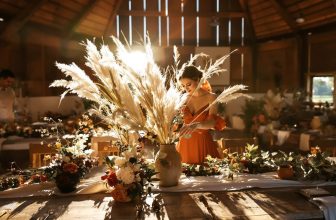
Dried flowers aren’t just a budget-friendly option for your terracotta wedding; they’re a style statement with staying power. When you compare the dried floral budget to fresh florals, you’ll find significant savings. Aisle clusters, fashioned from pampas grass and wheat stems, cost $75–$300 each, a fraction of fresh arrangements. Bud vase accents supply flexibility and cost only $8 per piece with DIY options. Ceremony focal accents, featuring neutral-toned elements like lunaria, yield visual depth and ambient lighting without breaking the bank, also ranging from $75–$300. Keepsake bouquets, averaging $200, guarantee your memories last well beyond the big day. Choosing dried over fresh not only aligns with your terracotta theme but also keeps costs manageable. These arrangements align with eco-conscious practices by utilizing dried flowers to reduce waste, making them a sustainable choice for your wedding decor.
Best fresh: greenery fillers, simple centerpieces, anything needing ‘fresh’ texture
Ever thought about the real cost of trying to produce that lush terracotta vibe with fresh florals? Fresh vs dried florals for terracotta weddings can be tricky. Fresh greenery fillers like seeded eucalyptus and baby’s breath add vibrant texture but come with a price—$22 per bunch for eucalyptus and $14-$25 for baby’s breath. When comparing dried versus fresh flower cost, fresh options seem more appealing at first glance, but their single-use nature and quick deterioration inflate costs. Simple fresh centerpieces range from $50 to $250, while DIY can lower it to $18-$25. Still, the freshness scheduling and weather risks with terracotta vessels make you wonder: are fresh florals worth the hassle when dried flower costs are 40-60% less? Dried florals evoke a rustic charm and can be used as home decor post-wedding, offering a cost-effective alternative to fresh flowers.
Hybrid strategy: fresh greens + dried texture for the terracotta look
When you’re planning a terracotta wedding, opting for a hybrid strategy that combines fresh greens with dried textures can be a game-changer. You want the vibrancy of fresh eucalyptus but cringe at fresh floral prices. Here’s the solution:
- Budget-Friendly: Allocate fresh blooms for high-visibility areas like the bridal bouquet. You’ll keep costs between $2,500–$3,500, unlike the $3,000–$6,000 fresh-only approach.
- Longevity: Fresh greens last 7–10 days, while dried textures endure the entire event without wilting.
- DIY Options: With DIY, save 45–55% compared to a florist. Yes, you can.
- Visual Impact: Achieve that terracotta look with bleached ruscus and spray roses—without breaking the bank.
- Customization: The hybrid strategy allows for mixing bulk wholesalers with Etsy dried elements, giving you the freedom to create a custom look that perfectly suits your terracotta theme. Consider seasonal blooms when selecting fresh elements to align with both aesthetics and budget efficiency.
Questions to ask your florist (storage, shedding, replacement policy, fire rules)
How do you guarantee your wedding florals don’t wilt or shed before you say “I do”? Start by grilling your florist. Their answers could save you a floral disaster. Here’s a cheat sheet of essential questions:
Grill your florist with crucial questions to dodge a wedding floral fiasco.
- Storage: “Where will my flowers be stored, and under what conditions?” You don’t want your flowers chilling in an overheated garage.
- Shedding: “What measures prevent flower shedding?” A small amount of hairspray on pampas grass goes a long way.
- Replacement Policy: “What’s the protocol if my favorite blooms suddenly become unavailable?” Substitutions should be of equal value.
- Fire Safety: “Are my arrangements compliant with fire safety rules?” You don’t want your wedding to go up in flames—literally.
Additionally, consider asking about the cancellation policies in place, as these can outline consequences for any postponements or cancellations that may occur. Get these answers, dodge a floral fiasco.
FAQ: does dried photograph ‘flat’ and how to avoid it
Why do dried flowers sometimes look lifeless in photos? It’s often the lighting and composition. Dried florals can appear flat, but you can combat this with a few tricks.
- Lighting Techniques: Use multiple light sources to eliminate harsh shadows. Backlighting or underlighting adds dimension, and diffusion layers soften the harshness.
- Color and Filters: Apply color filters to your lighting to enhance the dried petals’ tones. This compensates for their naturally dulled colors.
- Macro Photography: Get up close and personal. Capture the intricate textures and veining of individual petals to add depth. The natural aging process leads to gradual color changes, which can add a vintage charm to your photographs.
- Composition: Mix different flower types and shoot from various angles to disclose a bouquet’s true complexity.
Follow these tips, and your dried arrangements will pop!
Important notes (confirm your local vendor pricing and venue rules)
When planning your terracotta-themed wedding, getting local vendor pricing in writing is non-negotiable—trust me, your budget will thank you. Consider these four must-ask questions before you hand over any deposits: 1) What’s the itemized quote including seasonal and guest count variations? 2) Are there shipping zones and damage waivers you should be aware of? 3) How do they handle last-minute substitutions? 4) What’s the minimum order requirement? Don’t let unexpected costs turn your big day into a financial fiasco. Terracotta-themed weddings often incorporate high-quality silk flowers, which provide lasting beauty beyond seasonal changes, ensuring that your wedding remains stylish year-round. One cost-effective strategy is to repurpose ceremony florals for the reception, maximizing your investment and adhering to budget constraints.
Costs vary by season, market, and guest count—get itemized quotes in writing
Let’s face it, wedding planning can feel like a high-stakes game of financial Jenga. Costs for floral arrangements vary wildly, depending on the season, regional market, and guest count. You might think you’re saving by choosing dried florals, but don’t be fooled—prices can fluctuate. Always get itemized quotes in writing from vendors. It’s not just about the sticker price; it’s about understanding what you’re actually paying for. Seasonal availability affects fresh flowers more, but dried florals aren’t immune to market whims. Bigger guest lists mean more tables, hence more arrangements. Repurposing ceremony flowers for additional decor at the reception can also help save money. Don’t leave it to chance. Nail down those numbers early, so you avoid any nasty surprises. Protect your budget—because who needs extra stress on their big day?
Ask about delivery zones, damage waivers, substitutions, and minimums before deposits
Wedding planning is no walk in the park, especially when it comes to nailing down the floral details. Before you rush into deposits, get clear on shipping zones and minimums. Los Angeles florists love their tiered zones—expect $15-$50+ in shipping fees based on your venue’s location. And those minimum spends? They can start at $2,000 and soar to $8,000+ for luxury or mountain weddings. You’d think flowers are gold-plated at this rate. It’s also crucial to understand how labor and overhead costs are factored into floral pricing, as they significantly impact the final quote and ensure that the artistry and time investment are properly compensated. Don’t forget to ask about damage waivers and substitutions—florists sometimes swap flowers based on availability. Make sure substitutions don’t mess with your terracotta aesthetic. Get itemized quotes, inspect terms, and understand what’s included in shipping and setup fees. It’s your day; don’t let fine print steal your thunder.