
Why Vineyards Won’t Negotiate Wine Minimums (But Will Negotiate These 3 Things)
Wine minimums at vineyards? Non-negotiable, my friend. It guarantees revenue, covering operational costs and ensuring smooth staffing. Think of it as a cover charge they can’t ignore during peak seasons. But don’t panic—those rigid numbers don’t mean everything’s unmovable. You can wiggle room around bar timing, extra perks, and perhaps even site fee offsets. Smart negotiating can still get you those extra benefits without touching wine minimums. Want more tips? There’s more to discover ahead.
Quick takeaway: wine minimums are rarely negotiable—but the *terms around them* often are
While wine minimums at vineyards might seem like they’re etched in stone, the reality is rather more flexible—just not in the way you might hope. Wine minimums are usually non-negotiable, but don’t worry! You can still find some wiggle room. Here’s how to negotiate vineyard wedding costs with a touch of winery pricing flexibility:
Wine minimums seem fixed, but there’s room for negotiation in unexpected areas.
- Off-Season Discounts: Book your wedding in January-March for an October date and enjoy 15-25% savings.
- Ceremony Site Fee Waivers: Ask about waiving fees for ceremony sites on the property.
- Extended Reception Hours: Discuss extending reception hours without extra charges.
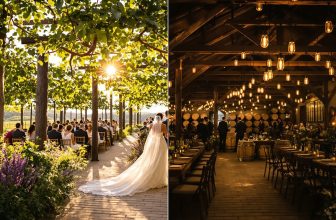
- Upgraded Spaces: Request an upgrade to more opulent barrel room spaces at no additional cost.
It’s crucial to understand the state regulations affecting alcohol service and catering, as these can influence the terms and conditions of your vineyard contract. In light of recent regulatory changes, there is also an increasing consumer demand for wines with complexity and character at lower ABV, a trend that may influence future offerings at vineyard weddings. These tactics can reveal vineyard contract flexibility and render your dream wedding more affordable.
Why vineyards set wine minimums (guaranteed revenue, staffing, opportunity cost)
Ever wonder why vineyards insist on those stubborn wine minimums? It’s not just to test your patience. They’re vital for several reasons:
- Guaranteed Revenue: Wine minimums guarantee a baseline income, essential for covering operational costs. It’s a safety net in the unpredictable wedding season, ensuring the winery can maintain its operational efficiency despite fluctuating demands.
- Staffing: Consistent minimums assist in managing staffing levels, guaranteeing the right number of hands are ready to pour and serve.
- Opportunity Cost: Hosting your event means turning away other potential business; minimums render it worthwhile. With the projected 15% job growth for restaurant cooks over the next decade, ensuring consistent staffing is more important than ever to meet the demands of events.
- Vineyard Pricing Negotiation: While you might not budge on the minimum, you can explore winery wedding discounts and other vineyard negotiation strategies to stretch your budget.
What usually won’t move (base minimum on peak dates, required fees, counting rules)
You might think wine minimums are a headache, but try negotiating peak date requirements. Vineyard pricing negotiation hits a wall here. Why? Harvest season is crunch time. The vines need full attention, making vineyard crews unavailable for extra commitments. The 75% rule ensures that wines maintain consistency and quality, allowing winemakers some flexibility to blend and adjust wines as needed.
Consider these immovable factors:
- Base Minimum on Peak Dates: Demand is high, and availability is low during harvest months.
- Required Fees: These cover mandatory costs and can’t be waived during peak times.
- Counting Rules: Legal and regional requirements, like federal grape percentage standards, lock in these figures.
- Estate Bottled Certifications: This 100% estate-grown rule is ironclad.
Understanding vineyard negotiation strategies means knowing what vineyards negotiate and what’s set in stone. So, focus elsewhere for flexibility!
The 3 things they *will* negotiate (most often)
When negotiating with vineyards, you might think everything’s set in stone, but guess what? They’re rather flexible on a few key points. First, they’ll often adjust what counts toward the minimum, like including a welcome pour or distinctive items. Second, they’re open to changes in timing and structure, such as shorter bar hours or hosted windows. Finally, they frequently provide add-ons or concessions: 1) glassware, 2) staffing, 3) tasting credit, and 4) room/site fee offsets. Understanding the basics of distribution agreements is essential for effective negotiation, allowing you to identify areas where flexibility is possible and ensuring alignment with your business strategy.
1) What counts toward the minimum (welcome pour, upgraded tier, specialty items)
Steering through vineyard minimums can feel like cracking a secret code, but here’s a tip: not all wine-related expenses are locked into that final tally. When you negotiate vineyard wedding costs, remember that welcome pours, upgraded wine tiers, and distinctive items might count toward your minimum. These can be your secret weapons in vineyard pricing negotiation. If you’re thinking of a higher-tier wine or a remarkable specialty item, ask if they’re counted in your minimum spend. It’s a vineyard negotiation strategy that can work in your favor. Don’t just accept the first proposal—probe somewhat. Not everything is set in stone. This approach can assist you in squeezing more value out of your budget while keeping your wine-loving guests happy. Remember, compliance with guidelines ensures lawful operation under new regulations, so always check if your vineyard’s policies align with local laws.
2) Timing and structure (shorter bar hours, hosted windows, last call)
Now that you’ve got a handle on what counts toward the vineyard minimum, let’s talk about another area ripe for negotiation: timing and structure. You might not sway a vineyard’s wine minimum, but their timing rules? That’s another story. Start by discussing shorter bar hours. If you’re confident guests won’t be guzzling wine all night, suggest closing the bar early. It saves cost and aligns with the vineyard’s interests too. Then there’s hosted windows—specific times when the bar’s on you. Negotiate these to coincide with your event’s peak flow. Finally, consider last call. Push it earlier to avoid those straggling guests overstaying their welcome. Timing tweaks can keep both your budget and the vineyard’s business model in harmony. Understanding local weather patterns is vital for planning, and regular monitoring can prevent potential vineyard issues.
3) Add-ons/concessions (glassware, staffing, tasting credit, room/site fee offsets)
Sure, you’re ready to talk business, but have you considered the perks that come with some negotiation savvy? Instead of focusing solely on wine minimums, why not explore add-ons and concessions? Vineyards may not budge on minimums, but they’re open to discussions about extras. Think monogrammed wine glasses that elevate your experience or staffing adjustments that guarantee your event runs smoothly. Don’t forget tasting credits—some places waive fees if you buy a certain number of bottles. And those room or site fees? There’s wiggle room there, especially if you’re booking during off-peak months. It’s all about knowing where to push. Some strategic negotiation can turn a good event into a great one. Remember, when it comes to negotiating grape contracts, clearly defining harvest timing and delivery logistics is crucial for maintaining smooth operations.
Minimum math table: turn a minimum into an effective per-guest bar rate
Negotiating vineyard minimums can feel like deciphering an ancient riddle, but here’s the secret sauce: you can turn that fearsome figure into a manageable per-guest bar rate. It’s all about the math. Divide the total minimum by your guest count, and voilà, you’ve got your effective rate. Here’s a quick breakdown to clarify:
| Total Minimum | Guest Count | Per-Guest Rate |
|---|---|---|
| $5,000 | 100 | $50 |
| $10,000 | 200 | $50 |
| $7,500 | 150 | $50 |
| $12,000 | 240 | $50 |
See the pattern? Consistency is key. While the total might seem overwhelming, breaking it down uncovers the true cost per person. This simplifies your budget and assists you in focusing on what truly matters—enjoying the wine! Keep in mind that wine minimums are a standard part of vineyard pricing, and understanding them can help you make informed decisions. If you encounter any traffic overload issues while trying to communicate with the vineyard’s website, try again later as these issues can sometimes resolve themselves.
Email script: how to ask for concessions without asking to ‘lower the minimum’
While math renders minimums manageable, actual negotiation requires tact and strategy. Instead of asking to lower the minimum, create an email that emphasizes flexibility and creativity. Here’s a simple script outline:
- Start with appreciation: Express genuine excitement about the venue. Compliments go a long way.
- Acknowledge the minimums: Show understanding of their business needs by recognizing fixed minimums. It’s important to note that contractual agreements dictate these minimums, ensuring profitability regardless of guest intake.
- Request alternatives: Politely inquire about other negotiable elements—like off-season rates or site fee waivers. Haggling is a common practice in some cultures, contrasting with Western norms, where it might be less prevalent but still holds value in specific scenarios.
- Offer solutions: Mention how booking off-peak or extending reception hours could be mutually beneficial.
This approach keeps the conversation positive and focused on what’s possible instead of what isn’t. Remember, it’s about finding common ground, not bulldozing through their business model.
Contract checklist (service charge vs gratuity, exclusions, overtime, leftovers)
Maneuvering a venue contract can feel like deciphering a cryptic puzzle, especially when it comes to understanding service charges versus gratuities. You might think they’re the same, but they’re not. Service charges are mandatory fees that the venue keeps unless stated otherwise, while gratuities belong to the staff. In California, it’s crucial to know that automatic gratuities are considered wages and are taxed accordingly. Here’s how to tackle this contract checklist:
- Service Charge vs. Gratuity: Verify your contract clearly defines these. Ambiguity can lead to legal headaches.
- Exclusions: Look for any hidden costs or services not included. Surprises aren’t fun when it comes to bills.
- Overtime: Confirm what happens if your event runs late. Better safe than sorry.
- Leftovers: Decide beforehand if you can take leftover wine or food home. Waste not, want not!
Educational only: minimum policies vary—confirm all negotiated items in writing
Steering vineyard contracts feels like tiptoeing through a maze, doesn’t it? Minimum policies vary wildly, and it’s not just about wine. To avoid getting entangled in misunderstandings, always verify everything in writing. Here’s what to keep in mind:
- Clarify Discounts: If you’re snagging off-season discounts, note the percentage and terms.
- Ceremony Fees: If the venue waives ceremony site fees, verify it’s documented to avoid surprise charges.
- Extended Hours: Agreeing on extended reception hours? Get it in writing to keep the party rolling.
- Upgrades: Securing that upgraded barrel room? Confirm it to avoid any last-minute downgrades.
Before entering negotiations, it’s crucial to have a detailed business plan to ensure alignment with your objectives, as it will guide you through the complex aspects of the wine business. Be proactive—don’t rely on verbal promises. Written confirmations are your safety net. Keep in mind that vendor lists are often used by venues to ensure quality and protect against non-compliance costs, which can be significant if ignored.