
How to Plan a Vineyard Wedding Without Breaking Your Alcohol Budget
Planning a vineyard wedding without draining your bank account takes savvy and a small amount of sass. Start by allocating 8-20% of your budget to alcohol, but don’t get swindled by slick package upgrades. Choose value over flash. Nail down your guest count—fewer guests, fewer wine headaches, literally. Negotiate venue minimums like a pro and know your local booze laws to avoid legal drama. Done right, you’ve cracked the code to an elegant vineyard party on a budget. Curious how it all comes together?
Who this guide is for (vineyard couples trying to control alcohol spend)
Planning a vineyard wedding on a budget can feel like squeezing wine from a stone. You’re likely dealing with vineyard wine minimums and sky-high markups. But don’t worry, you’re not alone. Many vineyard couples are confronting these challenges. You’re probably motivated by a desire to create a memorable celebration without drowning in debt. You need a vineyard wine selection strategy to keep costs in check. A key part of winery wedding beverage planning is understanding how to manage these minimums effectively. With the average alcohol cost for a wedding being $2,800, it’s crucial to strategically plan your beverage offerings to align with your budget.
Squeezing wine from a stone: vineyard wedding planning requires a savvy wine selection strategy.
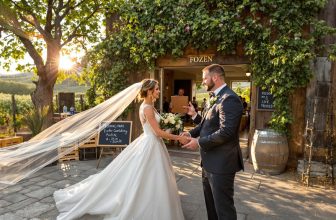
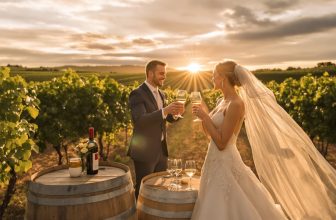
- Picture this: rows of vines beneath a sunset, your guests sipping elegantly, not gulping down drinks.
- Imagine: sharing a carefully chosen vintage that speaks to your story.
- Visualize: a reception where elegance meets practicality, not excess.
Step-by-step overview: plan a vineyard wedding without breaking your alcohol budget
When you’re trying to keep your vineyard wedding from becoming a financial fiasco, understanding how to allocate your alcohol budget is crucial. Here’s a step-by-step to guarantee you don’t overspend on vineyard wine costs. First, allocate 8-20% of your total wedding budget to alcohol. This isn’t just about crunching numbers; it’s about strategy. Use a vineyard wine selection strategy to compare pricing models: Ensure that you are aware of state regulations regarding alcohol service and catering, as this can impact costs and options available to you.
- By-consumption: Pay for what guests actually drink. Risky if they overindulge.
- Flat-rate per person: Provides cost certainty but might mean overpaying.
- Limited bar: Just beer and wine, saving you from pricey liquor.
Picture it: guests sipping wine under the vineyard’s twilight, your budget intact. It’s not just a wedding; it’s a well-planned celebration.
Step 1: understand the minimum (what counts, what doesn’t, and timing)
So, you’re planning a vineyard wedding and want to dodge the financial landmines that come with it. The first step? Get savvy about the vineyard wedding alcohol budget. Here’s the deal: vineyards often impose minimums that might seem tailored to empty your wallet faster than a pour of their finest Merlot. But with a smart vineyard wine selection strategy, you can outwit these requirements.
- Understand What Counts: Only certain wines or bottles might count toward your minimum. Know which ones.
- Track the Timing: The clock’s ticking. Know when to finalize orders to avoid last-minute markups. Keep in mind that wedding barn venues are limited to hosting six events per year, which could affect your scheduling options.
- Budget Wisely: Prioritize essential wines and skip the overpriced exclusives.
Step 2: choose the right package (tiers, upgrades, and best-value swaps)
Once you’ve got a handle on those pesky wine minimums, it’s time to tackle the next big obstacle: choosing the right package. With your vineyard wedding alcohol budget in mind, weigh the value of various package tiers. You could save big by selecting a beer and wine package if your guests aren’t spirits enthusiasts.
- Stick to mid-tier spirits: They’re a sweet spot for quality and price, saving you from the hefty top-shelf rates.
- Opt for shorter hours: A three-hour package leaves more room in your budget for other vineyard alcohol expenses.
- Consider consumption bars: They allow you to set a budget and shift to a cash bar, keeping costs predictable. ART Catering’s beverage packages offer an array of options, including domestic and imported beers, which can enhance the overall experience for your guests.
Your vineyard wine selection strategy will thank you!
Step 3: control consumption without feeling stingy (bar strategy + timing)
Maneuvering the alcohol landscape of a vineyard wedding without feeling like you’re pinching pennies requires a strategic approach. Start by limiting your bar options. A wine-only bar or a beer-and-wine bar naturally curbs consumption. People aren’t likely to overindulge when there’s no full liquor bar tempting them. Focus on your vineyard wine selection strategy to optimize your vineyard wedding alcohol budget.
Opt for a wine-only bar to naturally curb consumption and keep your wedding budget in check.
- Wine Pairings: Serve wine with each meal course. This vineyard wine minimum strategy keeps guests satisfied and spirits consumption down.
- Timing is Key: Structure toasts and first dances around specific drink services to pace consumption.
- Early-Hour Focus: Stock up for the first hour when guests are thirstiest. After that, consumption naturally tapers off. It is important to consider the number of glasses per guest to ensure you have an adequate amount of wine for the event.
Strategize smartly, and your budget will thank you!
Step 4: optimize your guest count and RSVP strategy (the math matters)
Let’s face it, guest counts are a vital factor in your wedding budget, and it’s time to get strategic about those RSVPs. Each extra guest can add $587–$717 to your costs. So, downsizing isn’t just a trend—it’s a smart move. Aim for that sweet spot of 50–75 guests, maximizing quality over quantity. Think of it this way: fewer guests equal fewer bottles of overpriced wine. In Martha’s Vineyard, the wedding cost is higher than the national average, making it even more crucial to manage your guest list efficiently.
Here’s the breakdown:
| Guest Count | Total Cost Impact |
|---|---|
| 50 Guests | $29,350–$35,850 |
| 75 Guests | $44,025–$53,775 |
| 95 Guests | $55,765–$68,115 |
| 125 Guests | $73,375–$89,625 |
| 150 Guests | $88,050–$107,550 |
Strategically managing RSVPs can keep your budget from spiraling and guarantee you enjoy your day without financial regret.
Step 5: negotiate the negotiables while accepting the minimum (fees, inclusions, timing)
You’ve nailed down your guest list, and now it’s time to tackle the art—and yes, it is an art—of negotiating those pesky fees and inclusions that can sneakily bloat your wedding budget. Start by scrutinizing every line of your venue contract. Those corkage fees? They range from a laughable $1 to a staggering $40 per bottle. Don’t just accept it; negotiate hard. Opt for flat-rate fees instead if possible. Consider limiting alcohol options during daytime events to save costs on both drinks and food.
- Bartender Costs: Know if their fees are bundled in or tacked on separately.
- Reception Timing: Keep it tight. More hours mean more drinks, and more dollars.
- Inclusions Check: Verify if glassware, mixers, and service staff are your responsibility or the venue’s.
Step 6: plan transportation and safety (shuttles, last call, liability)
When planning a vineyard wedding, don’t underestimate the importance of coordinating transportation and guaranteeing guest safety. Your guests shouldn’t have to navigate narrow vineyard roads after a few glasses of wine. Consider shuttles, especially when venues are more than 15 minutes apart or parking is tight.
- Coach buses: Ideal for large groups; think 40-50 passengers.
- Minibuses: Perfect for squeezing through those picturesque, but narrow, vineyard lanes.
- Dedicated vehicles: Essential for bridal party punctuality and photo ops.
Book these early—nine months in advance isn’t overkill. Also, set a clear last call, typically 30 minutes before the event ends. This aids in guaranteeing everyone leaves safely and satisfies local noise ordinances. Your liability? Minimized, just like the headaches. It’s important to note that alcohol is not permitted in parking areas, ensuring a safer environment for your guests.
Alcohol budget worksheet (simple table you can fill in)
Creating an alcohol budget worksheet is essential for planning a vineyard wedding without draining your bank account. You’ve got to keep it simple yet effective. Use a straightforward formula: guests × 2 drinks for the first hour + 1 drink per hour for the rest. Customize your worksheet with fields for guest count and reception duration. Break it down by drinker types—light, moderate, heavy. It’s important to set an overall budget number early in the planning process to avoid wedding-related debt.
Here’s a sample table to guide you:
| Guest Count | Total Drinks Needed | Estimated Cost |
|---|---|---|
| 100 | 500-1,000 | $2,500-$5,000 |
| 150 | 900 | $4,500 |
| 200 | 1,200 | $6,000 |
Scripts: how to talk to the venue about minimums and overage without conflict
Now that you’ve got your alcohol budget worksheet in shape, it’s time to face the real challenge: talking to the venue about those pesky minimums and potential overages. Here’s how to navigate this without sparking conflict. First, arm yourself with numbers. Know your guest count and estimated consumption—like a two-hour party needing about 300 servings for 150 people. Then, dig into the venue’s minimums, which often require more wine than you’ll actually need. Remember, corkage fees may apply if you bring in outside alcohol, adding an extra layer of cost to consider.
Prepare with numbers: 300 servings for 150 guests at a two-hour event; tackle venue minimums wisely.
- Ask for a breakdown: Politely request an itemized list explaining their minimums. You deserve transparency.
- Negotiate returns: Inquire if unopened bottles can be returned post-event.
- Propose flexibility: Suggest a tiered commitment—start with the minimum, but only buy more if necessary.
Stick to facts, and you’ll minimize stress.
Educational only: alcohol laws vary—confirm responsible service requirements locally
Dealing with alcohol laws at your vineyard wedding is like maneuvering through a labyrinth with a blindfold on. Every state has its own set of rules, and ignoring them can cost you big time. In Wisconsin, for instance, you’ll need to choose between a State Permit or a Municipal Liquor License. Meanwhile, North Carolina’s Limited Unique Event Permit lets you serve spirits—just don’t forget your $50 fee and those strict bartender ratios. Liability for underage drinking and accidents falls on the event host, so ensure you have adequate insurance and responsible bartenders. Imagery time:
- Wisconsin: Six events max, no hard liquor, guests can’t BYOB without a permit.
- North Carolina: No glass bottles, cans only, bartenders like hawks watching guests.
- New York: Temporary permits are like golden tickets—limited but essential.
Make sure you double-check local laws to keep your celebration legal.